

Dantsoho lauds Oyetola’s reforms for maritime turnaround, says Nigeria poised to lead Africa
Maureen Aguta
Nigeria’s maritime sector is entering a transformative phase driven by sweeping federal government reforms and strategic leadership, the Managing Director and Chief Executive Officer of the Nigerian Ports Authority (NPA), Dr. Abubakar Dantsoho, has said.
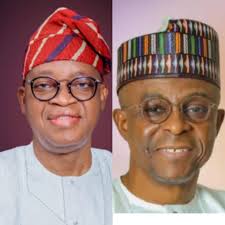
Speaking at the Blue Economy Investment Summit in Abuja, Dantsoho attributed the ongoing repositioning of the sector to policy direction under the Minister of Marine and Blue Economy, Dr. Adegboyega Oyetola, noting that a reform-driven agenda is steadily unlocking Nigeria’s vast maritime potential.
He told investors that Nigeria is not only primed to dominate Africa’s blue economy but is already laying the structural foundation to emerge as a leading maritime logistics hub on the continent.
“The time has come for a paradigm shift in the structure of Nigeria’s economy towards the full utilisation of our marine resources,” Dantsoho said. “Our port system, if properly harnessed, can serve as a major driver of economic growth.”
Anchoring his optimism on Nigeria’s strategic geographic advantage, demographic strength and economic scale, the NPA boss said the country is naturally positioned to function as West Africa’s maritime hub—drawing parallels with established global centres such as Singapore and Morocco.
However, he acknowledged a longstanding paradox undermining Nigeria’s maritime dominance. Despite accounting for over 60 per cent of West Africa’s Gross Domestic Product (GDP), the country currently handles only about 25 per cent of regional cargo traffic.
“This clearly shows that we have not fully optimised our potential,” he said, describing the gap as both a challenge and an opportunity for reform.
Dantsoho, nevertheless, assured stakeholders that the tide is shifting, citing a raft of policy and infrastructure initiatives being implemented by the Federal Ministry of Marine and Blue Economy to reposition the sector for global competitiveness.
Key among these reforms are port modernisation programmes, the deployment of a Trade Single Window, implementation of a Port Community System, development of deep seaports, and full digitalisation of port processes—measures he said are critical to improving efficiency and reducing bottlenecks.
“We are implementing key strategic initiatives to reposition our ports for global competitiveness,” he stated.
“These efforts are already enhancing operational efficiency and improving service delivery.”
He emphasised that private sector participation remains central to the execution of these initiatives, particularly in bridging infrastructure deficits. According to him, the NPA is actively promoting project financing models that enable investors to participate in critical port development projects.
“We are open to private sector participation through project financing. This approach is already improving efficiency and providing access to funding for critical infrastructure,” he said.
Dantsoho further outlined the broader economic impact of the reforms, noting that improved port efficiency would strengthen liner connectivity, attract larger vessels, reduce freight costs and significantly expand Nigeria’s non-oil export capacity.
“The ultimate goal is to improve connectivity, reduce logistics costs, and expand our export base. This will ultimately drive revenue growth and economic diversification,” he added.
He stressed that in an increasingly competitive global maritime landscape, Nigerian ports must align with international best practices, including competitive pricing, seamless operations and strong hinterland connectivity.
“With sustained commitment to these initiatives, Nigeria’s port system will enter a new phase and emerge as a leading maritime logistics hub in Africa,” he assured.
In his remarks, the Minister of Marine and Blue Economy, Adegboyega Oyetola, reinforced the administration’s commitment to harnessing Nigeria’s marine assets, noting that the country’s natural endowments provide a strong comparative advantage.
“With over 823 kilometres of coastline, extensive inland waterways and a prime location along the Gulf of Guinea, Nigeria is uniquely positioned to harness the immense potential of the marine and blue economy,” Oyetola said.
He added that ongoing reforms have improved inter-agency coordination, strengthened maritime security and enhanced investor confidence—key factors underpinning the sector’s resurgence.
The minister also underscored the strategic importance of the maritime industry to Nigeria’s economy, noting that it accounts for more than 90 per cent of the country’s international trade by volume.
Industry stakeholders at the summit said the alignment of policy reforms, infrastructure upgrades and private sector participation signals a decisive shift toward a more competitive and investment-friendly maritime environment—one that could finally enable Nigeria to claim its long-anticipated leadership position in Africa’s blue economy.