

Customs busts ₦12.8bn drug, expired medicine smuggling ring at Apapa Port
Maureen Aguta
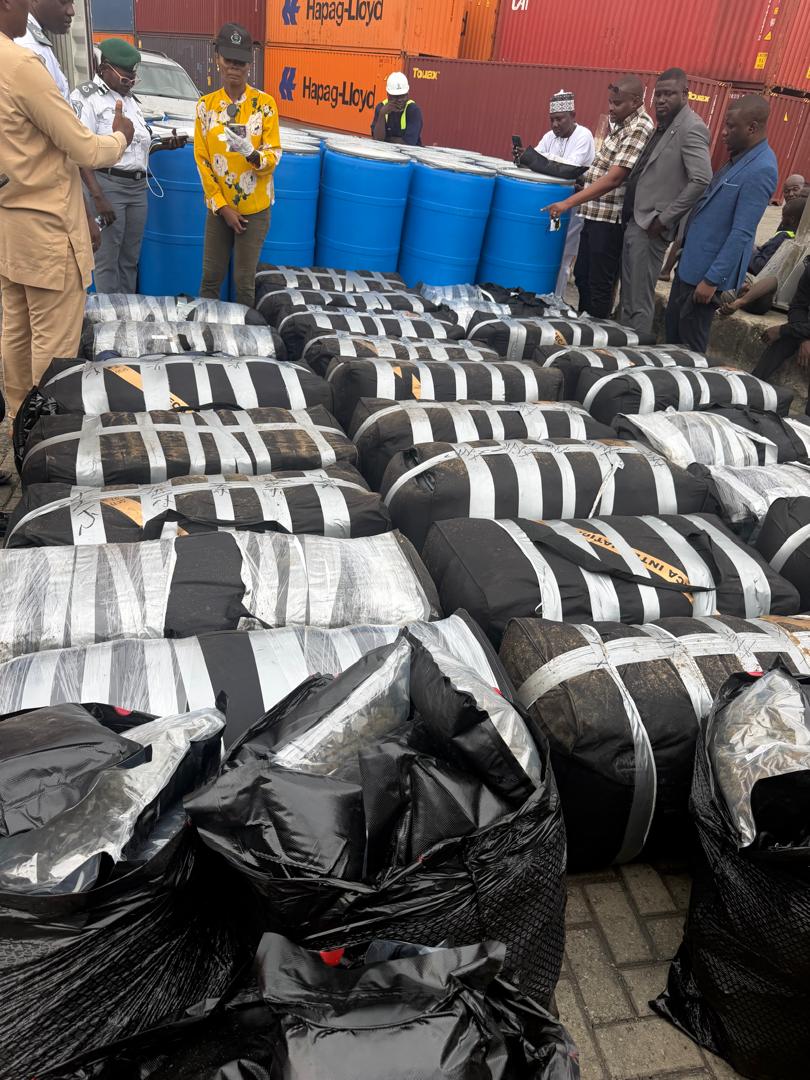
The Nigeria Customs Service (NCS), Apapa Area Command, has recorded one of its biggest anti-smuggling breakthroughs in recent times, intercepting 1.81 tonnes of Cannabis Sativa, popularly known as “Canadian Loud,” alongside two containers of expired pharmaceutical products with a combined Duty Paid Value (DPV) of over ₦12.78 billion.
The seizures, made through intelligence-led operations conducted in collaboration with the National Drug Law Enforcement Agency (NDLEA) and other security agencies, underscore growing concerns over attempts by criminal networks to use Nigeria’s busiest seaport as a gateway for illicit drugs and dangerous medical products.
According to Customs authorities, officers acting on credible intelligence on Monday, June 15, intercepted a 40-foot container, numbered CAAU7569127, containing 3,639 sachets of Cannabis Sativa concealed in a sophisticated manner inside vehicles and cargo items.
The illicit consignment, weighing approximately 1,819 kilograms, was hidden inside a black Toyota vehicle, a Toyota Sienna, as well as bags and drums loaded within the container.
Preliminary field tests confirmed the substance as Cannabis Sativa, commonly referred to as Canadian Loud, a highly potent strain of marijuana increasingly linked to organized drug trafficking networks.
Customs officials said the seizure reflects the command’s growing capacity to detect sophisticated concealment methods employed by smugglers seeking to evade port security systems.
In a separate operation, the command also intercepted two 40-foot containers laden with expired pharmaceutical products allegedly destined for relabelling and distribution within the Nigerian market.
One of the containers, identified as PCIU8771576, was found to contain expired medical products, including Cidoxilin Capsules, Cynamine Vitamin B12 Injection and Becoline B-Complex Injection.
The second container, numbered MRKU4961275, contained expired Oxytocin Injections, Mexclor Eye Drops, Avomex Tablets, Carbamazepine Tablets, Silymarin Tablets, Nystatin Tablets and Hyoscine Butylbromide Tablets.
Investigations revealed that many of the products expired between 2021 and 2023 and were allegedly being imported for relabelling before re-entering the healthcare supply chain.
Industry experts warn that the circulation of expired medicines poses significant risks to public health, potentially exposing patients to treatment failure, drug resistance and other life-threatening complications.
The combined value of the seized drugs and pharmaceutical products was put at ₦12,784,479,341.72, making it one of the most valuable seizures recorded by the Apapa Area Command in recent years.
Speaking on the development, Customs Area Controller of the Apapa Command, Comptroller Emmanuel Oshoba, described the perpetrators as enemies of national development and public safety.
He warned that smugglers, drug traffickers and importers of expired pharmaceuticals would face severe consequences as the command continues to strengthen its intelligence and surveillance capabilities.
“Those who engage in smuggling, drug trafficking and the importation of expired pharmaceuticals are enemies of Nigeria’s progress. We possess the intelligence, technology and operational capacity to identify and apprehend them,” Oshoba said.
He stressed that Apapa Port would not be allowed to serve as a transit point for economic sabotage, criminal activities or the importation of products capable of endangering the lives of Nigerians.
The Customs boss further disclosed that the port and all Customs-controlled areas remain under continuous monitoring, with officers deploying advanced risk assessment tools, strategic profiling and data analytics to identify high-risk consignments.
Analysts say the latest seizures highlight the growing role of intelligence-driven enforcement in combating transnational organized crime, while also protecting legitimate trade and safeguarding public health.
The Apapa Command reaffirmed its commitment to strengthening collaboration with sister security agencies and regulatory bodies to ensure that Nigeria’s borders and maritime gateways are not exploited by criminal elements seeking to undermine the economy and endanger public safety.