

FG moves to professionalise tourism sector as NIHOTOUR confers fellowships, launches skills council
Maureen Aguta
The Federal Government on Thursday intensified efforts to reposition Nigeria’s hospitality and tourism industry for global competitiveness, as the National Institute for Hospitality and Tourism (NIHOTOUR) conferred fellowships, inducted professionals and inaugurated the governing boards of the Hospitality and Tourism Sector Skills Council of Nigeria (HTSSCN) in Abuja.
The high-profile event, held at Merit House, Maitama, drew senior government officials, regulators, tourism operators, cultural institutions, hospitality investors and development partners in what stakeholders described as a major institutional shift aimed at strengthening regulation, professionalism and workforce standards across the sector.
At the ceremony, the government formally inducted registered practitioners into various professional categories while also inaugurating the Board of Trustees and Board of Directors of the HTSSCN, an employer-led platform designed to align workforce competencies with industry expectations.
Speaking at the event, the Minister of Art, Culture, Tourism and the Creative Economy, Hannatu Musa Musawa, said the initiative represented a strategic intervention to strengthen accountability, standards and institutional coordination within Nigeria’s tourism and hospitality ecosystem.
According to the minister, Nigeria’s vast cultural assets, tourism destinations and creative talents can only translate into sustainable economic value through professionalism, regulation and globally accepted operational standards.
She noted that the tourism and hospitality industry remains one of the fastest-growing sectors globally, contributing significantly to employment generation, foreign exchange earnings and cultural diplomacy.
Musawa explained that the NIHOTOUR Establishment Act has expanded the institute’s mandate beyond training, positioning it as a regulatory and certification authority for hospitality, tourism and travel practitioners in the country.
“No sector can attain sustainable growth without structure, standards, institutional coordination and skilled professionals,” she said, stressing the need for stronger collaboration between government agencies, operators, training institutions and private sector stakeholders.
In his keynote address, the Director-General and Chief Executive Officer of NIHOTOUR, Abisoye Fagade, described the event as a historic turning point in the formalisation of Nigeria’s tourism and hospitality industry.
Fagade said the induction of practitioners, conferment of fellowships and inauguration of the HTSSCN governing boards marked the beginning of a new era of institutional governance, professional recognition and sector-wide coordination.
“Regulation and standardisation are no longer optional; they are economic necessities if Nigeria truly intends to compete globally,” he stated.
He added that NIHOTOUR was repositioning itself beyond a conventional regulatory agency to become a strategic institutional partner focused on workforce development, competency-based certification and sustainable industry growth under the Renewed Hope Agenda of President Bola Ahmed Tinubu.
A major highlight of the event was the formal inauguration of the HTSSCN, which stakeholders believe will help address long-standing gaps in skills development, accreditation systems, curriculum enhancement and labour market intelligence within the tourism and hospitality industry.
The council is expected to drive globally aligned certification frameworks and strengthen partnerships between employers, training institutions and regulators.
In a strong endorsement of the reform initiative, the President of the Nigerian Bar Association, Afam Osigwe, said effective regulation remains critical to building investor confidence and improving service quality in the tourism sector.
According to him, globally respected industries are built on enforceable standards, professional licensing and institutional discipline.
“The absence of regulation weakens investor confidence, reduces service quality and limits international competitiveness,” he said, describing NIHOTOUR’s ongoing reforms as timely and necessary.
The event also received endorsements from key government agencies and sector leaders.
The Executive Secretary and Chief Executive Officer of the National Institute for Cultural Orientation, Biodun Ajiboye, highlighted the economic potential of culture as a strategic national asset capable of driving tourism growth and job creation.
Similarly, the Director-General of the Nigerian Tourism Development Authority, Olayiwola Awakan, commended NIHOTOUR’s leadership for promoting ethics, competence and continuous professional development across the tourism value chain.
Also speaking, the Director-General of the National Gallery of Art, Ahmed Bashir Sodangi, stressed the importance of leveraging culture, creativity and innovation to expand tourism opportunities and strengthen Nigeria’s global cultural influence.
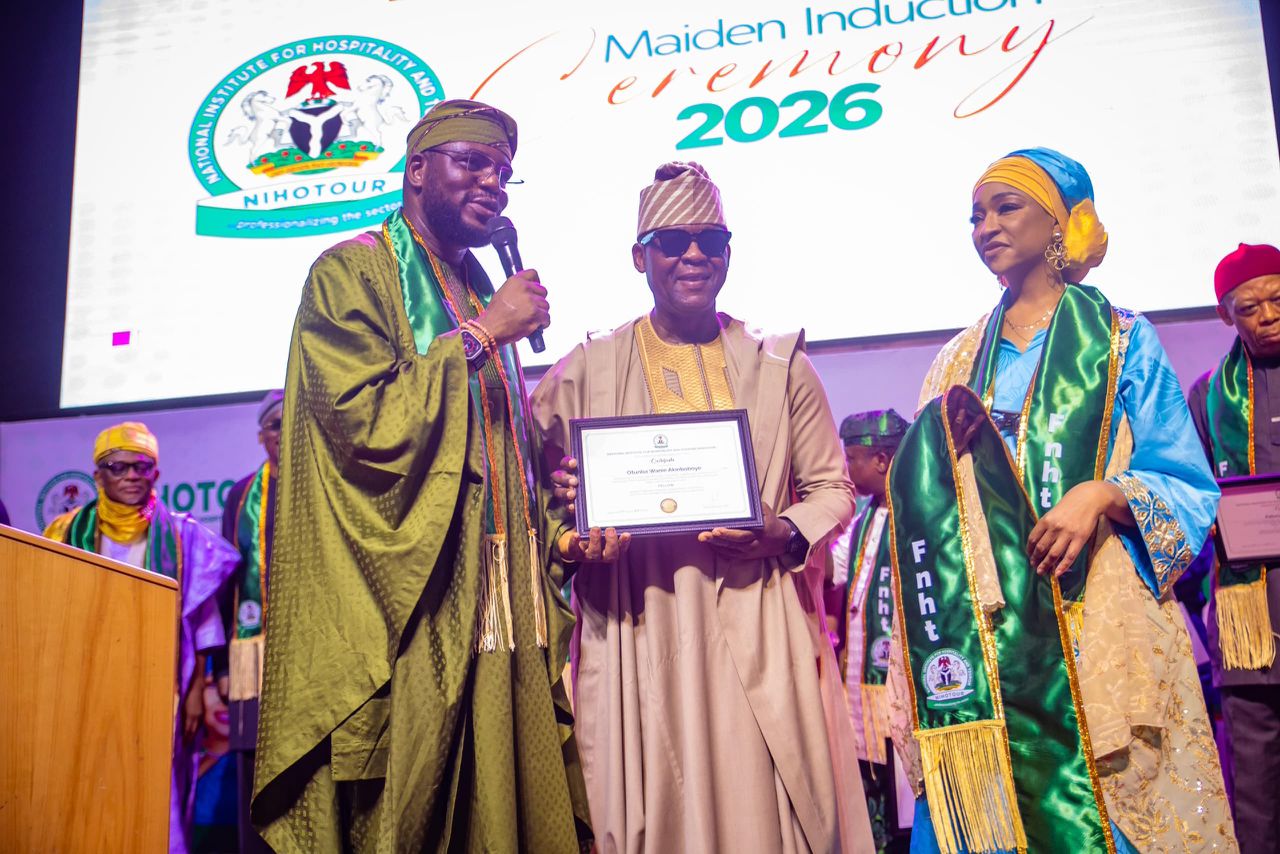
The ceremony featured the conferment of fellowship honours on several prominent Nigerians for their contributions to tourism development, public service, institutional leadership and cultural advancement.
Among those honoured were Musawa, Fagade, Permanent Secretary of the Federal Ministry of Art, Culture, Tourism and Creative Economy Ibrahim Abdulkarim Ozi, Director-General of the Nigerian Tourism Development Authority Olayiwola Awakan, Executive Secretary of NICO Biodun Ajiboye, Director-General of the Nigerian Civil Aviation Authority, Chris Ona Najomo, former NTDC Director-General Segun Runsewe, former Minister of Information and Culture Lai Mohammed, former NIHOTOUR Director-General Nura Sani Kangiwa, and aviation stakeholder Ado Sanusi, among others.
Industry stakeholders at the event unanimously praised NIHOTOUR’s reform agenda, describing it as a significant step toward transforming tourism and hospitality into a major pillar of economic diversification, employment generation and cultural diplomacy in Nigeria.
The latest initiative underscores the Federal Government’s broader push to unlock the economic potential of tourism, hospitality, culture and the creative economy as part of efforts to drive inclusive growth and national development.