

With fresh presidential mandate Adeniyi pushes aggressive reforms ahead of landmark C-PACT summit
Maureen Aguta
President Bola Ahmed Tinubu’s recent extension of the mandate of the Comptroller-General of Customs, Bashir Adewale Adeniyi, has placed renewed pressure on the Nigeria Customs Service (NCS) to deliver sweeping reforms in trade facilitation, port decongestion and the modernisation of cross-border systems—targets now taking centre stage as Nigeria prepares to host the maiden Customs Partnership for African Cooperation in Trade (C-PACT) Conference.
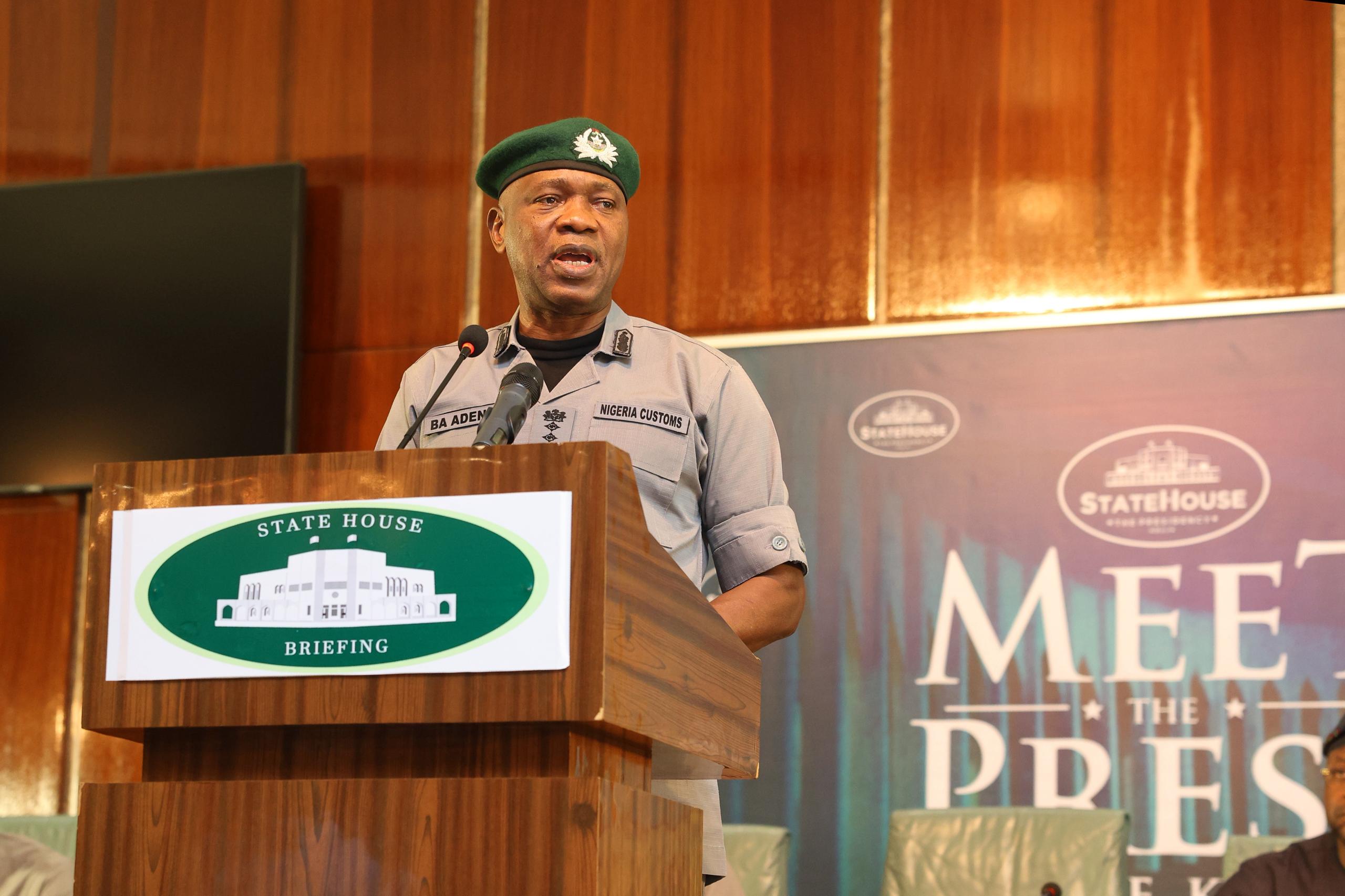
Briefing State House correspondents on Friday, 14 November 2025, under the “Meet the Press” platform at the Presidential Villa, the Customs boss said the President’s directive marks a decisive shift towards deploying trade as a primary engine of economic expansion and poverty reduction.
Adeniyi said the extended mandate came with “clear, measurable expectations,” especially in accelerating Nigeria’s preparedness for deeper participation in the African Continental Free Trade Area (AfCFTA). He noted that the President specifically highlighted the implementation of the free trade agreement as a priority deliverable for Customs under his renewed tenure.
“Mr President has made it very clear that he intends to use trade to promote economic development and alleviate poverty. So I was not surprised that the implementation of the continental free trade agreement was specifically mentioned in my renewed mandate,” Adeniyi said.
According to him, the directive has triggered intensified engagements with Customs administrations across the continent, including recent strategic discussions in Ghana with AfCFTA Secretary-General.
The engagements, he said, are designed to push for stronger involvement of Customs authorities in AfCFTA execution—an area long neglected in earlier regional trade frameworks.
“For many years, regional trade arrangements struggled because Customs was not brought in early enough,” he said. “If we must achieve the objectives of AfCFTA, Customs must play its role in enforcing rules of origin, applying preferences and ensuring that goods genuinely enjoy the benefits of the agreement.”
The forthcoming C-PACT Summit—scheduled for 17–19 November in Abuja—is expected to serve as a practical platform for repositioning Customs at the heart of Africa’s trade integration agenda. Adeniyi confirmed that more than 30 Customs administrations have registered, with 22 Directors-General leading their delegations, while private-sector interest has surged dramatically.
For Nigeria, the conference marks a major diplomatic milestone: the country will host the Secretary-General of the World Customs Organisation (WCO), Ian Sanders, for the first time. Adeniyi described the development as a “strong global endorsement of Nigeria’s growing leadership in shaping Africa’s trade systems.”
The CGC also highlighted improvements in Nigeria’s export performance, stating that export volumes have risen by more than 30 per cent over the past two years. The challenge, he said, is to channel more of these exports into African markets where Nigeria has historically underperformed despite its continental economic weight.
Adeniyi credited the momentum to strong inter-agency coordination involving the Federal Ministry of Finance, the Ministry of Industry, Trade and Investment, AFREXIMBANK, the Nigerian Export Promotion Council, port authorities and other trade-enabling institutions. Their alignment, he said, has created a “historic window to reposition Nigeria as a command centre for intra-African commerce.”
He urged the State House Press Corps to help deepen public awareness ahead of the Abuja summit, which will open with a direct engagement session featuring private-sector operators from across Africa to address persistent cross-border barriers.