

Nigeria tightens anti-drug net as Customs, NDLEA set up joint task committee
Maureen Aguta
The Nigeria Customs Service (NCS) and the National Drug Law Enforcement Agency (NDLEA) have taken a decisive step to reinforce Nigeria’s anti-narcotics architecture, agreeing to establish a joint committee aimed at tightening coordination, improving accountability, and strengthening enforcement outcomes.
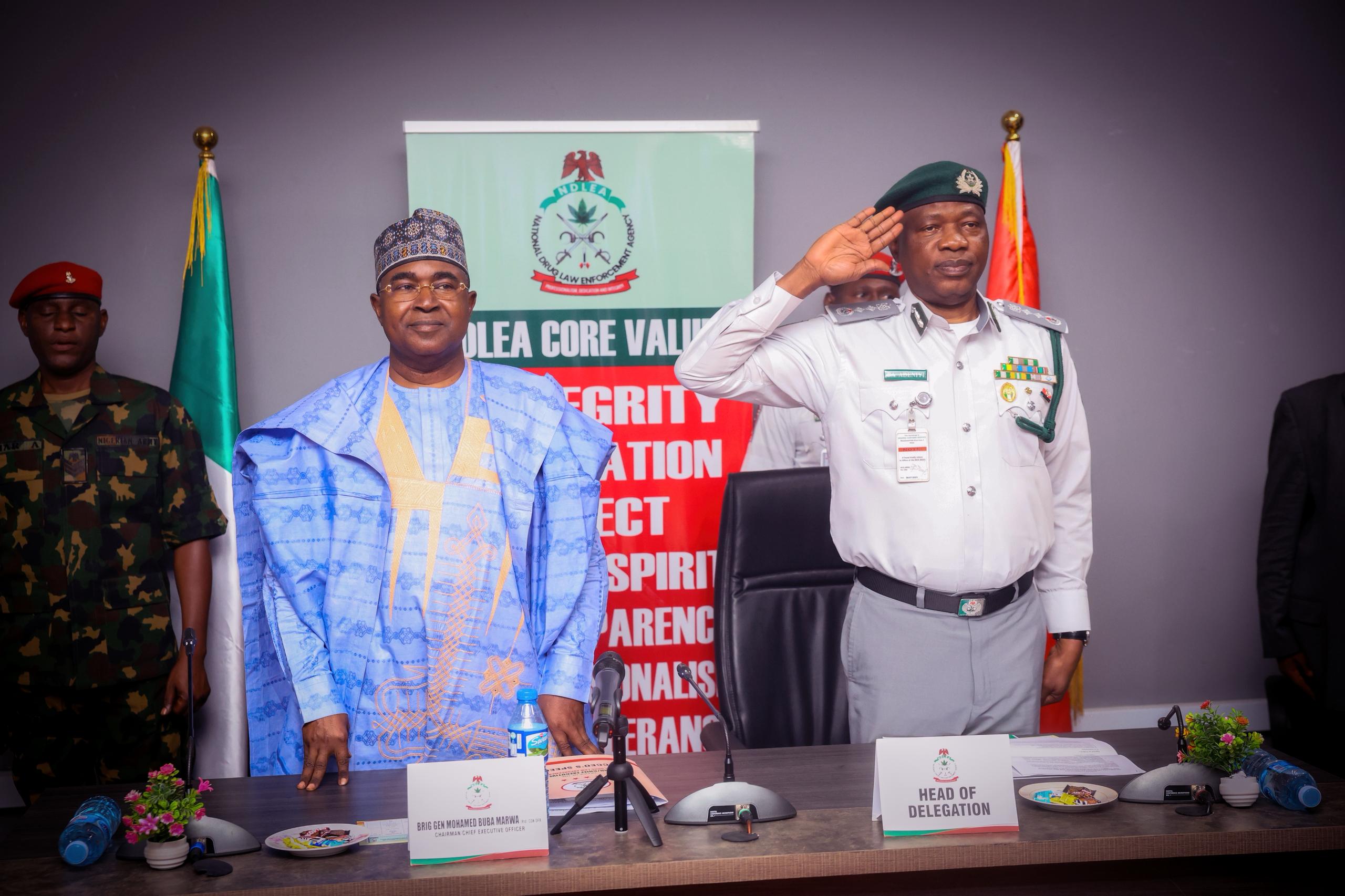
The move followed a high-level strategic meeting between the Comptroller-General of Customs, Adewale Adeniyi, and the NDLEA Chairman/Chief Executive Officer, Mohamed Buba Marwa, held on Monday at the NDLEA Headquarters in Jahi, Abuja.
At the core of the engagement was a shared recognition that Nigeria’s effectiveness in combating narcotics trafficking increasingly depends on seamless inter-agency collaboration, particularly amid heightened global scrutiny of the West African drug corridor.
Adeniyi, who arrived the meeting fresh from official engagements across Europe and Asia, underscored the international implications of Nigeria’s domestic enforcement performance.
He warned that the country’s credibility among global partners is directly tied to how efficiently intelligence is translated into tangible enforcement actions.
“Across international platforms, narcotics trafficking remains a dominant concern, with the West African corridor under intense watch,” he said. “Our agreements abroad will only hold weight if our operational credibility at home aligns with them.”
The Customs boss noted that the Service has sustained a series of high-profile seizures, particularly through the Apapa Command and other operational units, with consignments routinely handed over to NDLEA for further action.
However, he cautioned that interception alone is insufficient, stressing the need for a complete enforcement cycle that includes diligent prosecution, transparent handling of exhibits and prompt destruction of seized narcotics.
“Interdiction is only the beginning—not the end—of enforcement,” Adeniyi stated. “Where there are gaps in prosecution updates, delays in destruction, or weak custody chains, the entire system is compromised.”
To address these concerns, he proposed a strengthened framework anchored on joint destruction exercises in cases without suspects, periodic reporting on case progress, coordinated court appearances, and the establishment of dedicated liaison channels across operational commands.
In his response, Marwa acknowledged the concerns as both valid and timely, affirming NDLEA’s commitment to institutional transparency and professional synergy.
“The issues raised—particularly around post-transfer accountability and prosecution outcomes—are legitimate,” he said. “We must move beyond symbolic handovers to a structured reporting regime that ensures full visibility on investigations, prosecutions, and final disposal.”
He announced the immediate constitution of a joint committee tasked with reviewing grey areas in the existing Memorandum of Understanding between the two agencies.
The committee is expected to recommend clearer operational procedures and, where necessary, draft a supplementary agreement for approval by both leaderships.
“Today’s engagement provides a critical opportunity to address gaps and deepen collaboration,” Marwa added.
The initiative signals a strategic shift from isolated enforcement actions to an integrated, intelligence-driven framework—one that authorities say is essential to dismantling increasingly sophisticated drug trafficking networks and safeguarding Nigeria’s standing in global security cooperation.