
Democracy Day: FG seeks lifeline for 258 deported Nigerians from South Africa
By Maureen Aguta
As Nigeria marked Democracy Day, the Federal Government appealed to citizens, corporate organisations, state governments, religious institutions and development partners to rally support for the reintegration of 258 Nigerians recently returned from South Africa, warning that successful rehabilitation of the returnees requires a collective national effort.
The Minister of Humanitarian Affairs and Poverty Reduction, Dr. Bernard Doro, made the appeal while reflecting on the significance of Democracy Day, describing the occasion as more than a celebration of democratic governance but also a reminder of the values of compassion, inclusion and social responsibility.
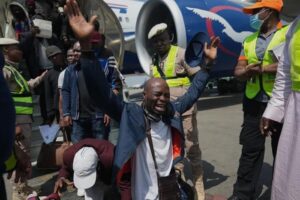
According to the minister, the returnees, who arrived at the Murtala Muhammed International Airport, Lagos, aboard a chartered Air Peace flight arranged by the Federal Government, face the daunting task of rebuilding their lives after experiencing severe disruptions to their livelihoods and future plans abroad.
Doro said while government agencies have successfully facilitated their safe return and commenced reintegration processes, broader support from society is needed to help them regain stability and economic independence.
“Government cannot do it alone,” the minister said. “The private sector, development organisations, philanthropic institutions, state governments and ordinary Nigerians all have a role to play in restoring dignity, rebuilding lives and creating opportunities for our people.”
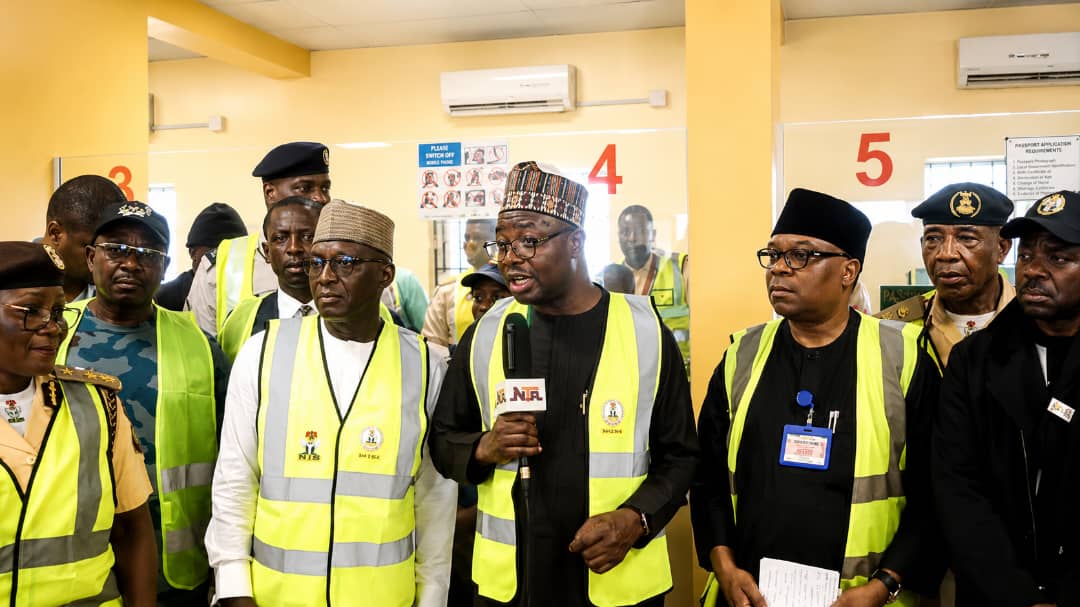
The minister, who joined other government officials in receiving the returnees, noted that many had endured difficult circumstances before their repatriation and now require both social and economic support to successfully reintegrate into Nigerian society.
He described the exercise as a reflection of President Bola Tinubu’s commitment to the welfare and protection of Nigerians, irrespective of their location.
According to Doro, the successful evacuation underscores the administration’s resolve to ensure that no Nigerian citizen is abandoned in times of distress.
“Every Nigerian matters,” he said, adding that the return of the affected citizens should not be viewed merely as the end of a difficult chapter but as the beginning of a new journey toward recovery and renewed opportunity.
The minister urged families, community leaders, employers, faith-based organisations and civil society groups to embrace the returnees and help create a supportive environment for their rehabilitation.
He noted that the emotional and psychological impact of displacement extends beyond the affected adults to children whose education, friendships and daily lives have been abruptly disrupted.
“It is difficult for anyone to suddenly leave behind a place where they have built a livelihood, established relationships and planned a future,” he said. “Families and communities have an important role to play in providing the support needed for healing and stability.”
Doro disclosed that government agencies have already commenced post-arrival interventions, including health screening, profiling and documentation of the returnees, while efforts are underway to provide humanitarian assistance and economic reintegration support.
Findings from the profiling exercise revealed that most of the returnees had migrated in search of better economic opportunities, highlighting the need for sustained investment in job creation, skills development, economic empowerment and social protection programmes within Nigeria.
“Their experiences remind us of the urgent need to create opportunities at home while strengthening systems that protect vulnerable populations,” the minister said.
As part of reintegration efforts, several returnees have already received livelihood starter packs, financial assistance and other forms of support aimed at helping them rebuild their lives and regain economic independence.
Additional interventions are being implemented through partnerships involving private sector organisations, philanthropic groups and state governments.
Doro described the support as practical demonstrations of national solidarity and called on more organisations to join the effort.
He commended the National Commission for Refugees, Migrants and Internally Displaced Persons (NCFRMI) for coordinating the reception and reintegration process and acknowledged the contributions of the Federal Ministry of Foreign Affairs, the Nigerians in Diaspora Commission (NiDCOM), the National Emergency Management Agency (NEMA), the Federal Airports Authority of Nigeria (FAAN), the Nigeria Immigration Service (NIS), Port Health Services, Air Peace and other stakeholders involved in the operation.
The minister reaffirmed the government’s commitment to strengthening reintegration systems and expanding partnerships aimed at moving vulnerable citizens from dependency to self-reliance.
“As we welcome our brothers and sisters home, our focus must remain on restoring dignity, rebuilding lives and ensuring that every Nigerian has access to opportunities that enable them to thrive,” he said.
“Democracy is strongest when citizens care for one another. Nation-building is not the responsibility of government alone; it is a responsibility shared by all Nigerians.”