
Customs busts ₦6.3bn smuggling ring at Apapa, seizes 13 containers of expired drugs, codeine, security gear
Maureen Aguta
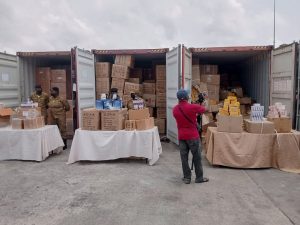
The Apapa Area Command of the Nigeria Customs Service (NCS) has uncovered a massive smuggling operation at the nation’s busiest seaport, seizing 13 containers laden with expired pharmaceuticals, controlled drugs, security equipment and other prohibited goods with a combined Duty Paid Value of ₦6.38 billion.
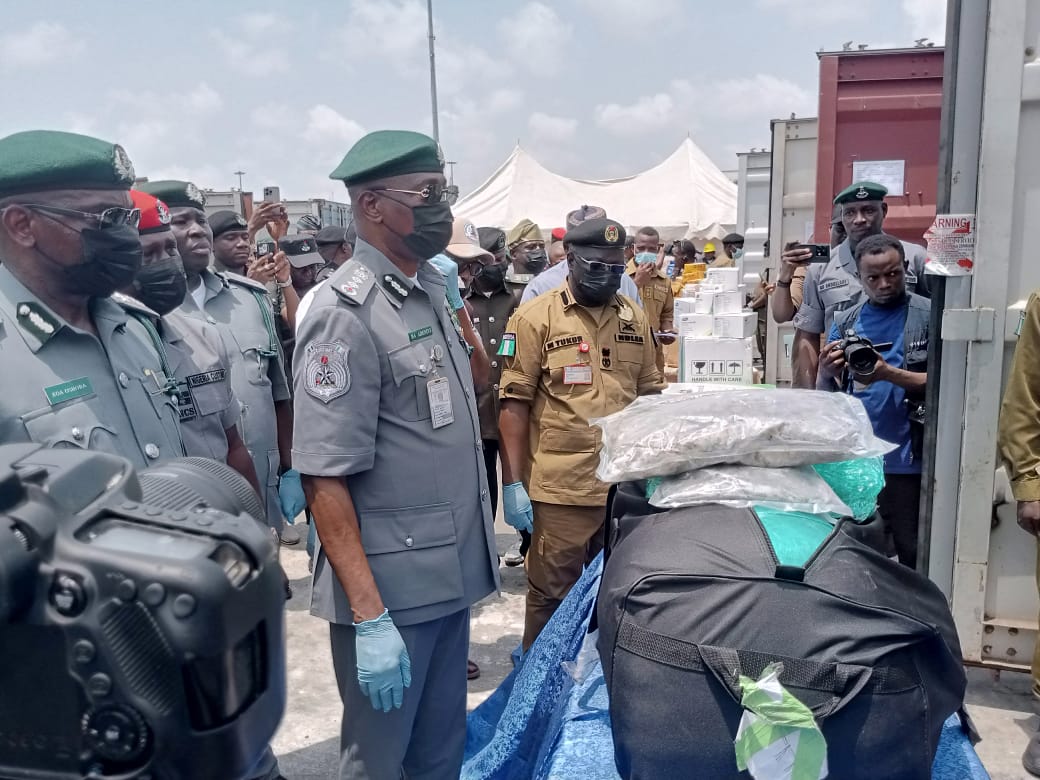
The Comptroller-General of Customs, Bashir Adewale Adeniyi, disclosed the seizures on Tuesday during a press briefing at APM Terminals Apapa in Lagos, describing the interceptions as the outcome of intensified intelligence-led enforcement backed by scanning technology and targeted physical examination of cargo.
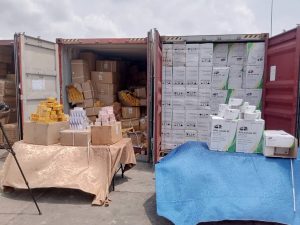
According to him, the seized consignments included expired pharmaceutical products such as Mixagrip Cold Caplets, Ladinax tablets, chloroquine injections and diclofenac tablets. Customs officers also intercepted large quantities of Hyegra 200 and Sildenafil Citrate, as well as 800 cartons of codeine concealed inside toilet flushing cisterns and sanitary ware.
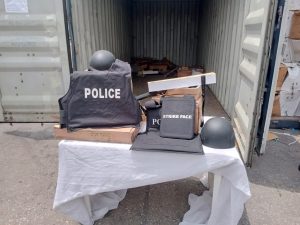
Other items recovered from the containers included cartons of artesunate injections, restricted security equipment such as bulletproof vests, helmets, walkie-talkies and tactical torches, alongside several containers of expired food products.
Further seizures comprised expired muffin cookie biscuits, 36,000 cans of expired Primo energy drinks, and containers of expired St. Kelvin and De Truth tomato paste.
In another discovery, Customs officers found 1,700 cartons of codeine cough syrup hidden inside consignments of luxury food flasks, while a separate container held 1,575 cartons of CSMIX with codeine concealed among cartons of electric kettles.
The enforcement operation also led to the interception of 13 jumbo bags of Cannabis Sativa weighing 347.57 kilograms, concealed inside a Toyota Sienna vehicle.
Adeniyi said the cumulative value of the intercepted goods stood at ₦6,381,237,988, warning that the importation of expired drugs and controlled substances poses grave risks to public health and national security.
“The concealment of codeine-based products represents a calculated attempt to fuel substance abuse and undermine our healthcare system,” he said. “Let me state clearly that Apapa Port is no longer a playground for smugglers or criminal syndicates hiding behind legitimate trade documentation.”
The Customs chief noted that physical examination still accounts for a large portion of cargo inspections, underscoring the need to expand non-intrusive inspection through modern scanning technology.
He said the Service is working to significantly increase the volume of cargo subjected to scanning across major ports including Apapa Port, Tin Can Island Port, Port Harcourt Port, Onne Port and Calabar Port before the end of the year.
According to him, expanding non-intrusive inspection will improve enforcement accuracy, reduce port congestion and support faster clearance for compliant traders.
“Our strategic objective is to strengthen intelligence-driven risk management so that physical examinations are focused on high-risk consignments while compliant traders enjoy faster cargo clearance,” Adeniyi said.
He urged importers and clearing agents to improve compliance and take advantage of the Authorised Economic Operator (AEO) programme, which offers trusted traders more predictable and expedited clearance procedures.
Adeniyi added that, in line with the provisions of the Nigeria Customs Service Act 2023, the seized items are liable to outright forfeiture to the Federal Government, while individuals linked to the shipments will face prosecution.
He, however, reassured legitimate traders that Customs enforcement is targeted strictly at criminal networks exploiting the trade system.
“While our mandate is to facilitate legitimate trade, we must also ensure that our ports are not used by criminal syndicates attempting to introduce dangerous, prohibited or falsely declared goods into the country,” he said.