

Adalikwu pushes for reforms as ferry accidents claim 8,000 lives in West/Central Africa in 10 years
Maureen Aguta
The Secretary-General of the Maritime Organisation of West and Central Africa (MOWCA), Dr Paul Adalikwu, has intensified calls for sweeping safety reforms in the region’s ferry and inland waterways transportation sector following revelations that more than 8,000 people have died in ferry-related accidents across West and Central Africa in the past decade.
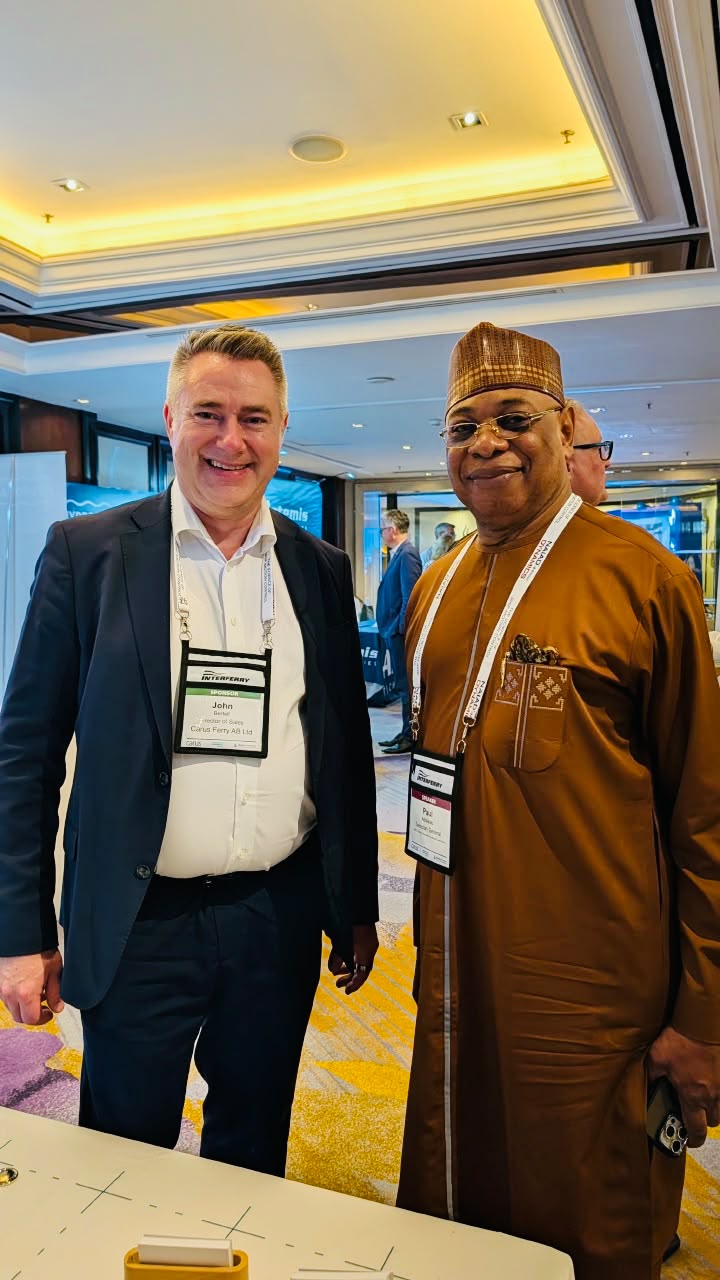
Adalikwu, who disclosed this at the 50th anniversary conference of the International Ferry Association (Interferry) in Bangkok, Thailand, said the disturbing casualty figure underscored the urgent need for stronger regulatory enforcement, improved vessel standards, professional crew training and sustained investment in maritime safety infrastructure.
He identified Nigeria, Senegal and the Democratic Republic of Congo as among the countries most affected by ferry accidents, warning that persistent operational and regulatory weaknesses continued to expose thousands of waterway users to avoidable risks.
The MOWCA chief reaffirmed the organisation’s commitment to making ferry and inland waterways transportation safer and more sustainable across its 25 member states, stressing that regional cooperation and international partnerships were critical to reversing the trend.
MOWCA participated in the landmark Interferry conference, held from October 31 to November 4, 2026, and hosted by Chao Phraya Express Boat in Bangkok under the theme, “Stronger Than Ever… Together.”
The organisation’s participation highlighted its determination to strengthen international cooperation, promote knowledge exchange and deepen strategic partnerships aimed at improving ferry transportation across the region.
Congratulating Interferry on its 50th anniversary, Adalikwu commended the association’s transformation from the International Marine Transit Association, established in the United States in 1976, into a leading global trade organisation for the ferry industry.
Interferry currently represents about 300 member companies and more than 2,200 individuals across over 40 countries.
He noted that over five decades, the organisation had built a strong reputation through its advocacy at the International Maritime Organisation (IMO), promotion of safety initiatives and support for practical pathways to decarbonising ferry operations.
Adalikwu said the milestone was an opportunity to celebrate Interferry’s contributions to the global maritime industry while strengthening collective efforts to address the safety challenges confronting ferry transportation, particularly in developing regions.
Identifying the major causes of ferry accidents in West and Central Africa, he listed vessel overloading, poorly maintained boats, weak regulation and enforcement, inadequate safety equipment and insufficient crew training.
He also identified night-time operations without adequate illumination and navigation under adverse weather conditions as major factors contributing to accidents on the region’s inland and coastal waterways.
He stressed that addressing the challenges required comprehensive reforms, including stronger regulatory institutions, improved operational standards, modern safety equipment and effective emergency response mechanisms.
Adalikwu said MOWCA had intensified efforts to tackle the problem through coordinated regional interventions and partnerships with international maritime organisations.
He recalled that in mid-2024, MOWCA partnered with the IMO and the International Maritime Rescue Federation (IMRF) to convene a regional workshop in Libreville, Gabon.
The workshop produced the Libreville Action Plan, which established priority areas for improving ferry safety across West and Central Africa.
The action plan focuses on strengthening regulatory frameworks, improving crew and technical training, enforcing vessel seaworthiness standards, ensuring safe passenger boarding and cargo handling, upgrading navigation aids and traffic monitoring systems, and developing effective search-and-rescue capabilities.
Building on the initiative, MOWCA collaborated with Interferry and the Lagos State Waterways Authority (LASWA) to host the Regional Ferry Safety Conference in Lagos in June 2025.
The conference, themed “Charting Safer Waters: Advancing Ferry Safety through Innovation, Collaboration and Integrated Transport Solutions,” attracted about 220 policymakers, maritime regulators, ferry operators and other industry stakeholders.
A major outcome was the signing of a Memorandum of Understanding (MoU) between Adalikwu and Interferry Chief Executive Officer, Mike Corrigan, establishing a framework for long-term cooperation on ferry safety development in Africa.
The agreement provides for joint public awareness campaigns, capacity-building programmes, regulatory strengthening, infrastructure and sustainability studies, as well as knowledge-sharing between international ferry operators and African stakeholders.
In furtherance of the agreement, Interferry has launched an 18-month Ferry Safety Development and Mentoring Programme in Lagos in partnership with LASWA.
The initiative, described as the first of its kind in Africa, is designed to train approximately 50 ferry captains, marine engineers and managers through digital learning, virtual mentoring by international experts and practical training sessions.
The programme is expected to improve professional competence, strengthen operational standards and entrench a safety-first culture among ferry operators.
Adalikwu said MOWCA would sustain its engagement with the IMO, African Union and development partners to promote internationally recognised maritime safety standards adapted to the peculiar conditions of inland and coastal waterways in the region.
He identified fleet modernisation, wider adoption of technologies such as Automatic Identification Systems (AIS), improved weather monitoring and stronger safety procedures as critical components of the organisation’s reform agenda.
He also emphasised the importance of applying the principles of the International Convention for the Safety of Life at Sea (SOLAS), adapted to inland and coastal water transportation, to improve safety and protect passengers and crew.
Beyond preventing accidents and saving lives, Adalikwu said safer ferry services were essential to unlocking the economic potential of the region’s waterways and advancing the blue economy.
According to him, an efficient and reliable water transportation network would improve regional connectivity, facilitate the movement of goods and passengers, support trade under the African Continental Free Trade Area (AfCFTA) and create economic opportunities for both coastal and landlocked member states.
He added that developing safer waterways would also reduce pressure on road infrastructure and strengthen multimodal transportation systems across the region.
The MOWCA Secretary-General maintained that the organisation’s participation in Interferry’s 50th anniversary conference reinforced its determination to translate regional action plans and international partnerships into practical improvements in water transportation.
He said the ultimate objective was to reduce ferry accidents, strengthen operational standards and ensure that the waterways of West and Central Africa became safer, more reliable and economically productive.