

Nigeria takes lead as Customs, AfCFTA advance simplified cross-border trade framework
Maureen Aguta
Nigeria has taken a decisive step toward reshaping small-scale cross-border trade as the Nigeria Customs Service (NCS) deepens engagement with the African Continental Free Trade Area Secretariat on the rollout of a Simplified Trade Regime (STR) designed to lower barriers for micro, small and medium enterprises (MSMEs).
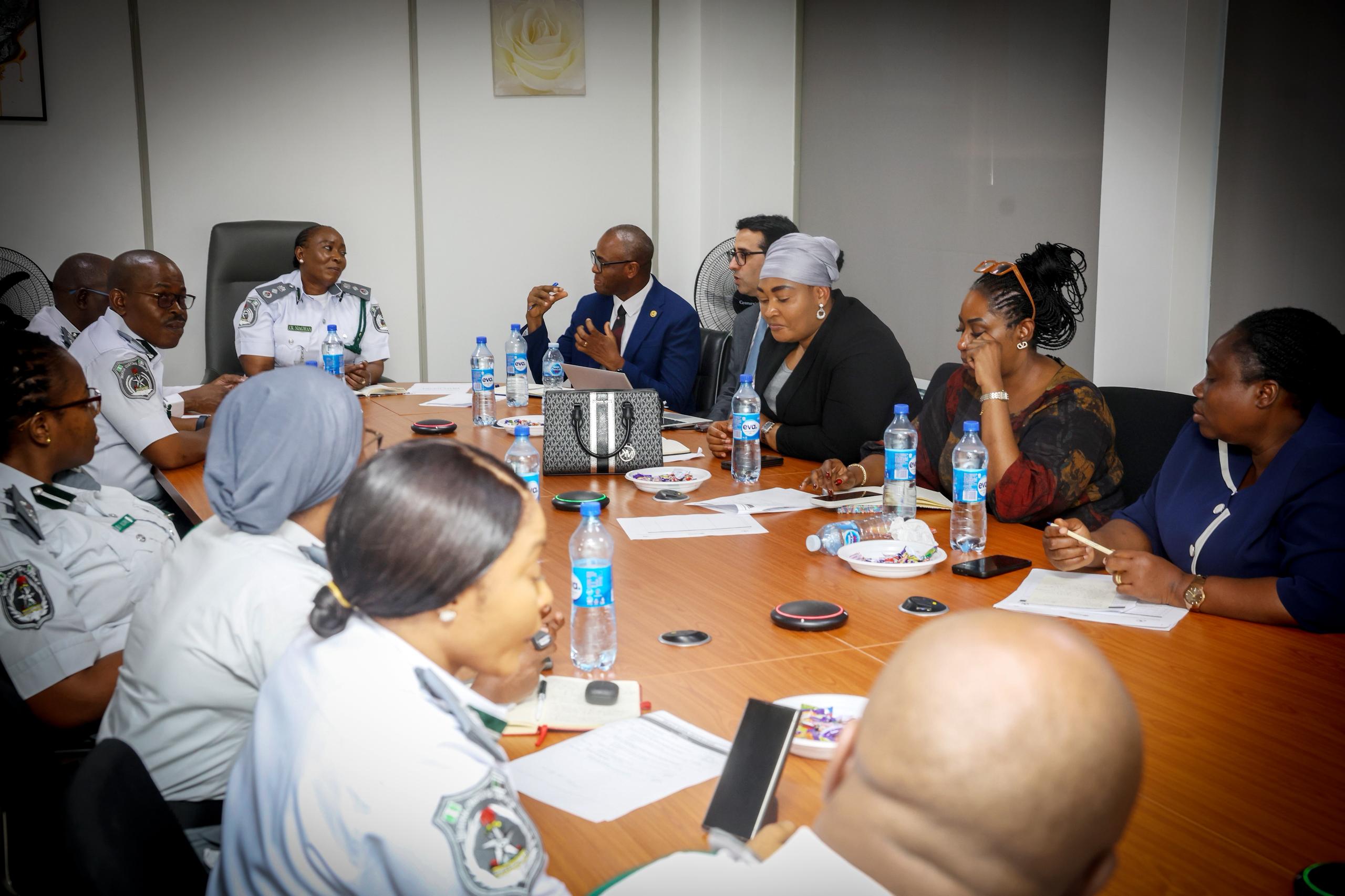
At a high-level meeting held at the Customs Headquarters in Maitama, Abuja, on March 23, 2026, both sides signalled a shared commitment to translating policy ambition into practical frameworks that can expand participation in intra-African trade—particularly among informal and small-scale operators who dominate border economies.
Representing the Comptroller-General of Customs, the Deputy Comptroller-General in charge of Tariff and Trade, Caroline Niagwan, framed the initiative as a critical intervention in Nigeria’s trade facilitation agenda. She emphasised that simplifying procedures without compromising regulatory compliance remains central to the Service’s reform trajectory.
“Our goal is to make trade easier, more transparent, and inclusive for small-scale traders, while ensuring compliance with national and regional trade regulations,” Niagwan said, underscoring the delicate balance between facilitation and enforcement.
The engagement comes as Nigeria assumes a pivotal role as the pilot country for the STR in West Africa under the broader African Continental Free Trade Area framework. Leading the AfCFTA delegation, Pedro Estevao highlighted Nigeria’s strategic importance, noting that its market size and economic weight position it as a potential catalyst for scaling inclusive trade across the region.
“The success of the STR in Nigeria will send a strong signal across West Africa and the continent,” Estevao said, pointing to the country’s capacity to set operational benchmarks for other member states.
At the heart of the discussions was the NCS’s draft Standard Operating Procedure (SOP) for implementing the STR. The proposed framework outlines streamlined customs processes tailored to informal cross-border trade, passenger baggage, and low-value e-commerce transactions—segments that have historically operated on the margins of formal trade systems.
Customs officials detailed plans to deploy digital declaration platforms alongside risk-based control mechanisms aimed at accelerating clearance while maintaining oversight. The approach, according to insiders, is designed to reduce bottlenecks at border posts, cut transaction costs, and minimise discretionary practices that often discourage small traders.
Providing a continental perspective, AfCFTA consultant Nabil Zibani presented the broader STR architecture, stressing that accessibility and simplicity are essential to bringing MSMEs into formal trade channels. He noted that overly complex documentation and opaque procedures have long excluded small traders from benefiting fully from regional trade agreements.
“The STR is about removing friction from the system—making it possible for small traders to comply without being overwhelmed,” Zibani explained.
Deliberations revealed significant alignment between Nigeria’s draft SOP and the AfCFTA framework. Key areas of convergence include the simplification of documentation requirements, adoption of digital platforms for declarations and cargo clearance, and the introduction of de minimis thresholds to ease the movement of low-value goods.
Participants also underscored the importance of inclusivity, with particular focus on women traders who constitute a large proportion of informal cross-border commerce. By lowering entry barriers and formalising trade processes, the STR is expected to enhance access to finance, improve data capture, and strengthen policy support for this often-overlooked segment.
Beyond policy alignment, both parties acknowledged the operational challenges that lie ahead, including infrastructure gaps, capacity constraints, and the need for stakeholder sensitisation. To this end, they agreed to sustain technical engagements aimed at refining implementation strategies and ensuring coherence between national procedures and continental guidelines.
Trade analysts say the success of the STR could mark a turning point for Nigeria’s non-oil export drive, especially at a time when the government is seeking to diversify revenue sources and deepen regional integration. By formalising informal trade flows, authorities can improve revenue collection while empowering small businesses to scale beyond local markets.
The Abuja meeting, therefore, represents more than a routine policy dialogue—it signals a strategic shift toward inclusive trade governance, where efficiency, transparency, and accessibility are prioritised alongside compliance.
If effectively implemented, the Simplified Trade Regime could unlock new economic opportunities for thousands of small traders, strengthen Nigeria’s leadership within the AfCFTA, and accelerate the realisation of a truly integrated African market.