

Customs Officers’ wives mobilise nationwide tree planting drive
To plant 1,000 trees in one hour within multiple locations
Maureen Aguta
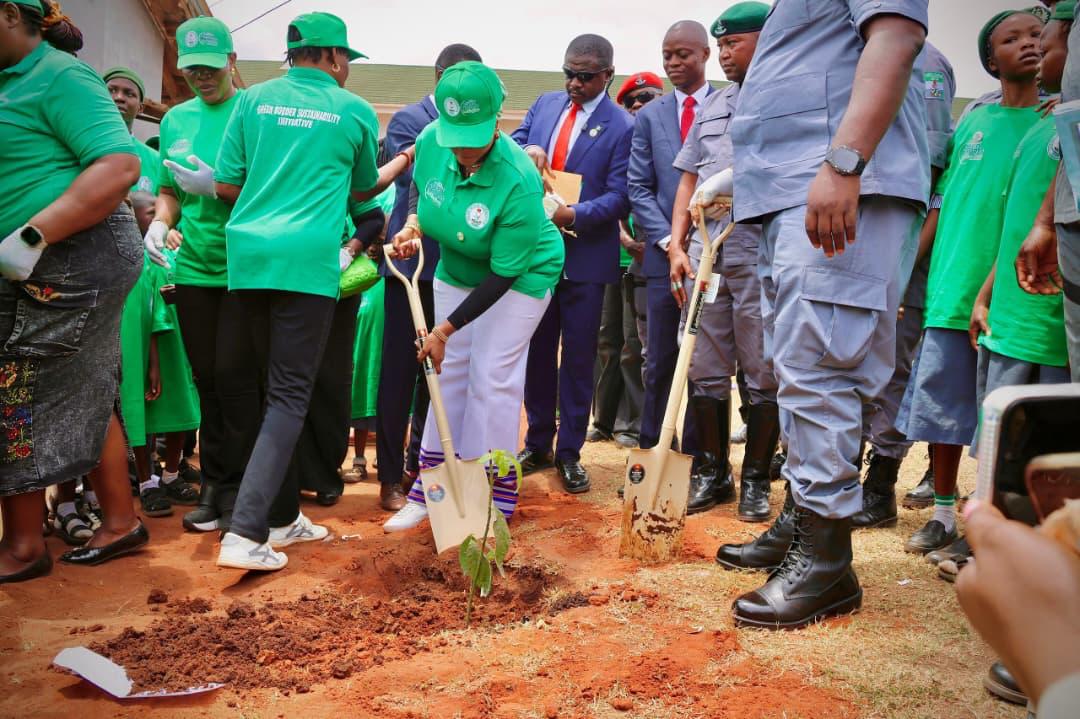
The Customs Officers’ Wives Association (COWA) has unveiled an ambitious nationwide environmental campaign aimed at planting 1,000 trees within a single hour across multiple locations in Nigeria, in what organisers describe as a bold statement of grassroots commitment to sustainability and climate action.
Scheduled for Thursday, April 30, 2026, between 7:00 a.m. and 8:00 a.m., the coordinated exercise—tagged “1,000 Trees in One Hour”—will see volunteers, community members, and environmental advocates converge simultaneously at designated sites nationwide under the association’s Green Borders sustainability initiative.
The campaign reflects a growing shift toward community-driven environmental advocacy, with COWA leveraging its national network to drive awareness and action around pressing ecological challenges, including deforestation, land degradation, and climate change.
Organisers say the one-hour target is both symbolic and strategic—designed to demonstrate the power of collective action while delivering measurable environmental impact.
By synchronising planting activities across states, the initiative aims to amplify visibility, inspire civic participation, and reinforce the urgency of environmental stewardship.
Speaking ahead of the launch, COWA National President, Mrs. Kikelomo Adeniyi, described the initiative as a rallying call for shared responsibility in safeguarding the environment.
“This campaign goes beyond planting trees. It is about restoring ecosystems, strengthening communities, and instilling a culture of environmental responsibility that can endure across generations,” she said.
Adeniyi noted that the programme aligns with the association’s broader vision of integrating sustainability with community development, particularly through initiatives that encourage citizen engagement at the grassroots level.
“What we are demonstrating is that meaningful environmental action does not always begin with large-scale policies—it can start with communities coming together with a shared purpose. The trees we plant today represent both ecological restoration and a commitment to a more sustainable future,” she added.
Beyond the immediate planting exercise, the initiative is structured to spark sustained public discourse on environmental protection and long-term ecosystem restoration.
COWA officials say the campaign is also intended to strengthen partnerships with environmental stakeholders and expand participation in future sustainability programmes.
The association emphasised that the exercise will not be a one-off intervention but part of a broader, evolving movement under the Green Borders framework.
The long-term goal, according to Adeniyi, is to cultivate environmental consciousness as a way of life, particularly among young people and women, who are seen as critical drivers of community transformation.
“Our vision is to build a nationwide culture where sustainability is people-driven. Through this initiative, we hope to inspire local ownership, deepen partnerships, and create a ripple effect of environmental action across communities,” she said.
The nationwide rollout will feature carefully coordinated planting efforts, with participants working within the one-hour window to meet the target.
Observers say the initiative underscores the increasing role of civic groups in complementing formal environmental policies, particularly in mobilising local action and awareness.
With the launch of the campaign, COWA is positioning itself as a key player in Nigeria’s growing ecosystem of community-based environmental advocacy—demonstrating how coordinated citizen action can contribute meaningfully to national and global sustainability goals.