

NIHOTOUR promotes Nigeria’s culinary heritage at Nigeria-China food festival
Maureen Aguta
Nigeria and China have taken their decades-long diplomatic relationship into the kitchen, using food as a bridge for cultural exchange, tourism promotion and economic opportunity at the 2026 Nigeria–China Food Festival in Abuja.
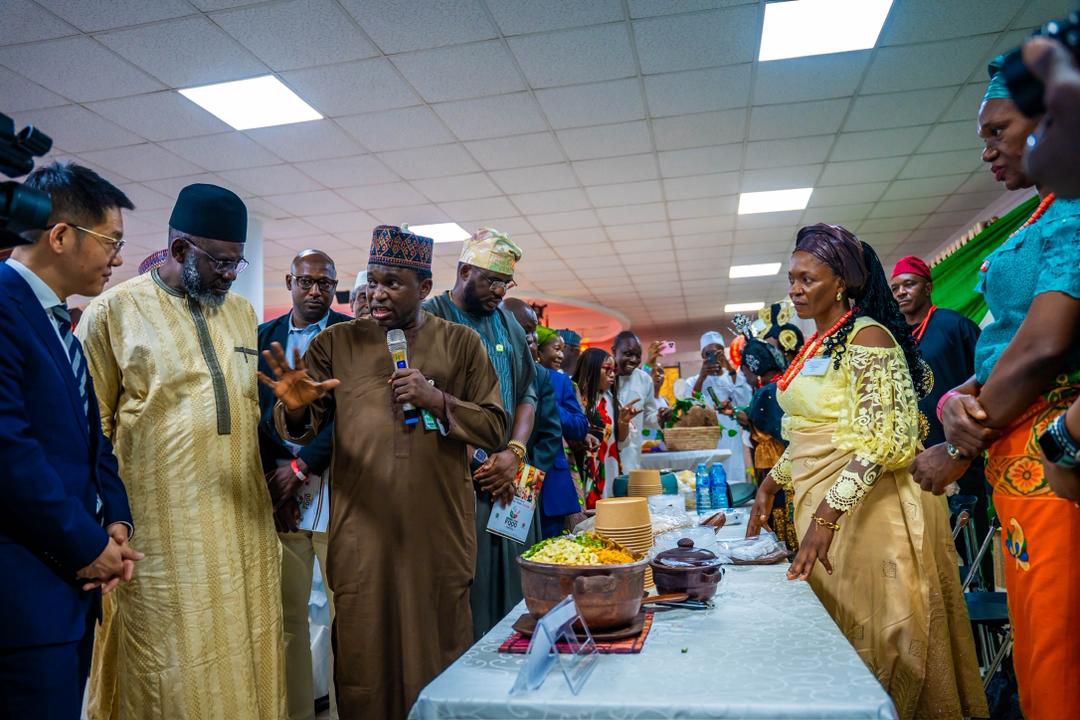
The festival, organised by the National Institute for Hospitality and Tourism (NIHOTOUR) in collaboration with the China Cultural Centre in Nigeria, brought together more than 200 participants from the hospitality, tourism, culinary, business and cultural sectors.
Held on August 27 at the China Cultural Centre, Abuja, the event, themed “From Farm to Feast,” formed part of activities marking 55 years of diplomatic relations between Nigeria and China.
The festival offered participants a rare opportunity to experience the culinary traditions of both countries, with 14 Chinese dishes representing seven regions of China and 12 Nigerian dishes drawn from the country’s six geopolitical zones.
Beyond the food, the event showcased the people, skills and enterprises that sustain the culinary and hospitality value chain — from farmers and food producers to processors, chefs, restaurateurs and tourism operators.
For NIHOTOUR, the initiative was not merely a celebration of cuisine but a strategic platform for promoting Nigerian gastronomy as an integral component of the country’s tourism economy.
Speaking at the festival, the Director-General/Chief Executive Officer of NIHOTOUR, Aare Abisoye Fagade, reaffirmed the Institute’s commitment to strengthening professional skills in the hospitality and tourism sector while creating opportunities for young people, entrepreneurs and industry practitioners.
Fagade stressed the importance of developing the human capital required to transform Nigeria’s rich culinary heritage into sustainable tourism and business opportunities.
The “From Farm to Feast” theme also highlighted the extensive value chain behind every meal, drawing attention to the contribution of farmers, producers, processors, chefs and hospitality businesses to the wider economy.
Nigeria’s culinary diversity, NIHOTOUR noted, represents a largely underutilised tourism asset. Each of the country’s six geopolitical zones possesses distinctive dishes, ingredients, cooking techniques and food traditions that could be packaged into experiences for domestic and international tourists.
The Chargé d’Affaires ad interim of the Embassy of the People’s Republic of China in Nigeria, Mr. Zhou Hongyou, underscored the capacity of food to foster understanding between peoples and strengthen people-to-people relations.
Also in attendance was the Cultural Counsellor of the Chinese Embassy and Director of the China Cultural Centre in Nigeria, Mr. Yang Jianxing, whose participation reinforced the cultural diplomacy dimension of the festival.
The event featured food presentations and cultural activities from both countries, creating opportunities for interaction and potential partnerships in hospitality, tourism, culinary education, cultural exchange and enterprise development.
The celebration comes as Nigeria and China mark 55 years of diplomatic relations, with bilateral ties having expanded over the decades beyond government-to-government engagement into trade, investment, education, infrastructure and cultural cooperation.
The food festival therefore provided a people-centred dimension to the relationship, demonstrating how shared experiences around food can promote mutual understanding while opening new possibilities for tourism and hospitality cooperation.
For NIHOTOUR, the broader objective is to ensure that Nigeria’s culinary heritage moves beyond household consumption and becomes a professionally developed and internationally marketable tourism product.
The Institute said it would continue to pursue partnerships capable of strengthening hospitality skills, supporting entrepreneurs and promoting Nigeria’s diverse food and cultural heritage.
As global tourism increasingly embraces authentic local experiences, Nigeria’s rich culinary traditions could provide a powerful new avenue for attracting visitors, creating jobs and generating income across the tourism value chain.
If you want, I can also produce �3–5 punchier New Telegraph-style alternative headlines for the story.