

FG, NIWA step up inland waterway safety with intensive training for 75 boat operators
Maureen Aguta
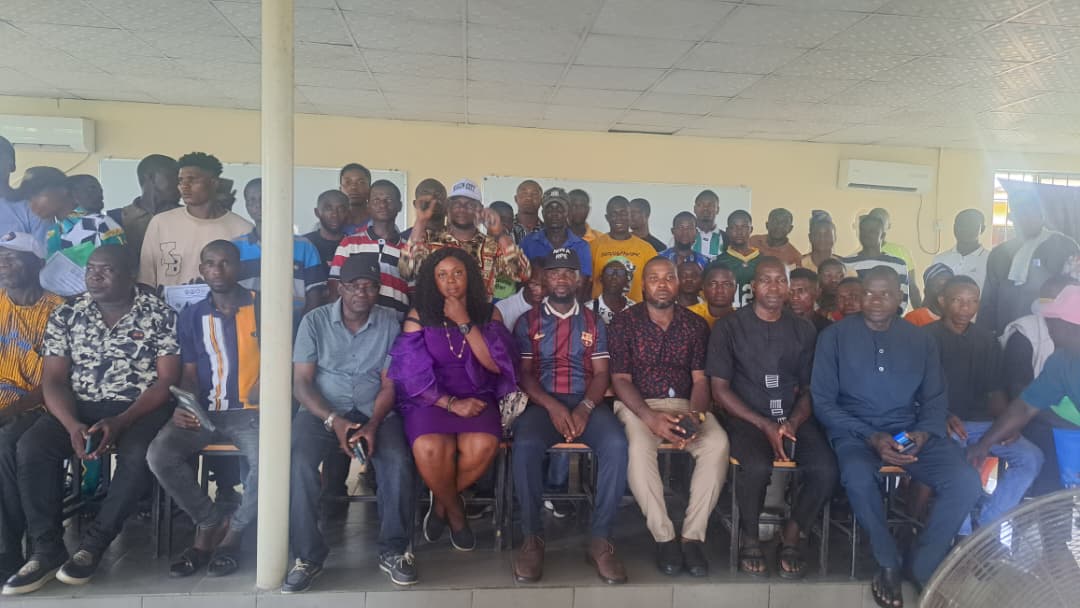
In a renewed push to curb accidents and professionalise Nigeria’s inland water transport sector, the Federal Ministry of Marine and Blue Economy, in partnership with the National Inland Waterways Authority (NIWA), has trained 75 boat drivers and skippers from Lagos, Ogun and Ondo states on safe navigation and operational standards.
The three-day Boat Navigation and Safety Training, held from Monday, December 22 to Wednesday, December 24, 2025, was designed to equip operators with the technical competence and practical skills required for the issuance of the Certificate in Safe Boating and Navigation, a key requirement for safer inland waterway operations.
Participants were drawn from major boating and transport unions, including the Maritime Workers Union of Nigeria (MWUN), the Association of Tourist Boat Operators and Water Transporters of Nigeria (ATBOWATAN), and the Waterfront Boat Owners and Transporters Association of Nigeria (WABOTAN), reflecting NIWA’s inclusive approach to safety enforcement and capacity development.
Speaking at the closing ceremony, Mr. Timothy Clement of the NIWA Lagos Area Office described the training as a critical intervention aimed at reversing the trend of avoidable accidents on Nigeria’s inland waterways.
He noted that investigations into past boat mishaps had often traced the causes to inadequate technical knowledge, poor safety culture and limited hands-on experience among operators.
According to him, NIWA has intensified efforts beyond training, including the removal of wrecks to enhance navigational safety and sustained sensitisation campaigns along major water routes such as CMS, Ikorodu, Badore, Badagry and the Port Novo corridor.
“This year alone, NIWA carried out sensitisation exercises two to three times across different jetties,” Clement said.
“We are now taking safety messages directly to operators, jetty by jetty, while encouraging boat owners to release more of their skippers and captains for structured training. With sustained capacity-building, we expect significant improvement in waterway safety.”
He expressed optimism that the impact of the programme would be more evident over time, stressing that consistent training remains central to reducing fatalities and building confidence in water transport.
Also speaking, the Lead Trainer and Consultant, Dr. Sileola Akinbowale, described the programme as a life-saving initiative aimed at strengthening manpower capacity in the inland waterways sector.
She explained that the training combined classroom instruction with practical, on-water exercises to ensure participants acquired both theoretical knowledge and real-world operational skills.
“We did not restrict this programme to lectures alone,” Akinbowale said. “Participants were taken to the jetty for practical sessions, which made the training very effective. It was comprehensive and hands-on.”
She rated the programme about 90 per cent successful and commended the Federal Government, the Minister of Marine and Blue Economy, Adegboyega Oyetola, as well as the former Managing Director of NIWA, Bola Oyebamiji, for prioritising safety and human capacity development in the sector.
She added that continuous training would remain essential to saving lives and improving professionalism on Nigeria’s waterways.
Participants, in turn, praised the initiative as timely and impactful. A Lagos-based boat operator, Wasiu Olalekan, said the training had significantly improved operators’ ability to respond to emergencies.
“With this training, we now understand how to handle distress situations on the waterways. On behalf of participants from Lagos State, I appreciate the Minister and NIWA management for this opportunity,” he said.
From Ondo State, Biobaku John said the programme exposed him to critical safety, firefighting and emergency response skills that would enhance his professionalism. “I learned a lot in these three days, and I am proud to have been part of this training,” he noted.
Similarly, the leader of the Ogun State delegation, Pami Ronald, said participants received extensive instruction on boat handling, first aid, emergency response, engine maintenance and effective water transport management.
“For three days, we were trained on safety, first aid, raising alarms, calling rescue teams and even engine maintenance. It was very educative,” he said.
The training forms part of broader reforms being implemented by the Ministry of Marine and Blue Economy and NIWA, in line with recommendations from past accident investigation reports, to raise safety standards, strengthen professionalism and boost public confidence in inland waterway transportation across Nigeria.