

Edun: Single Window launch ends port delays, slashes cost of doing business, grows trade
By Maureen Aguta
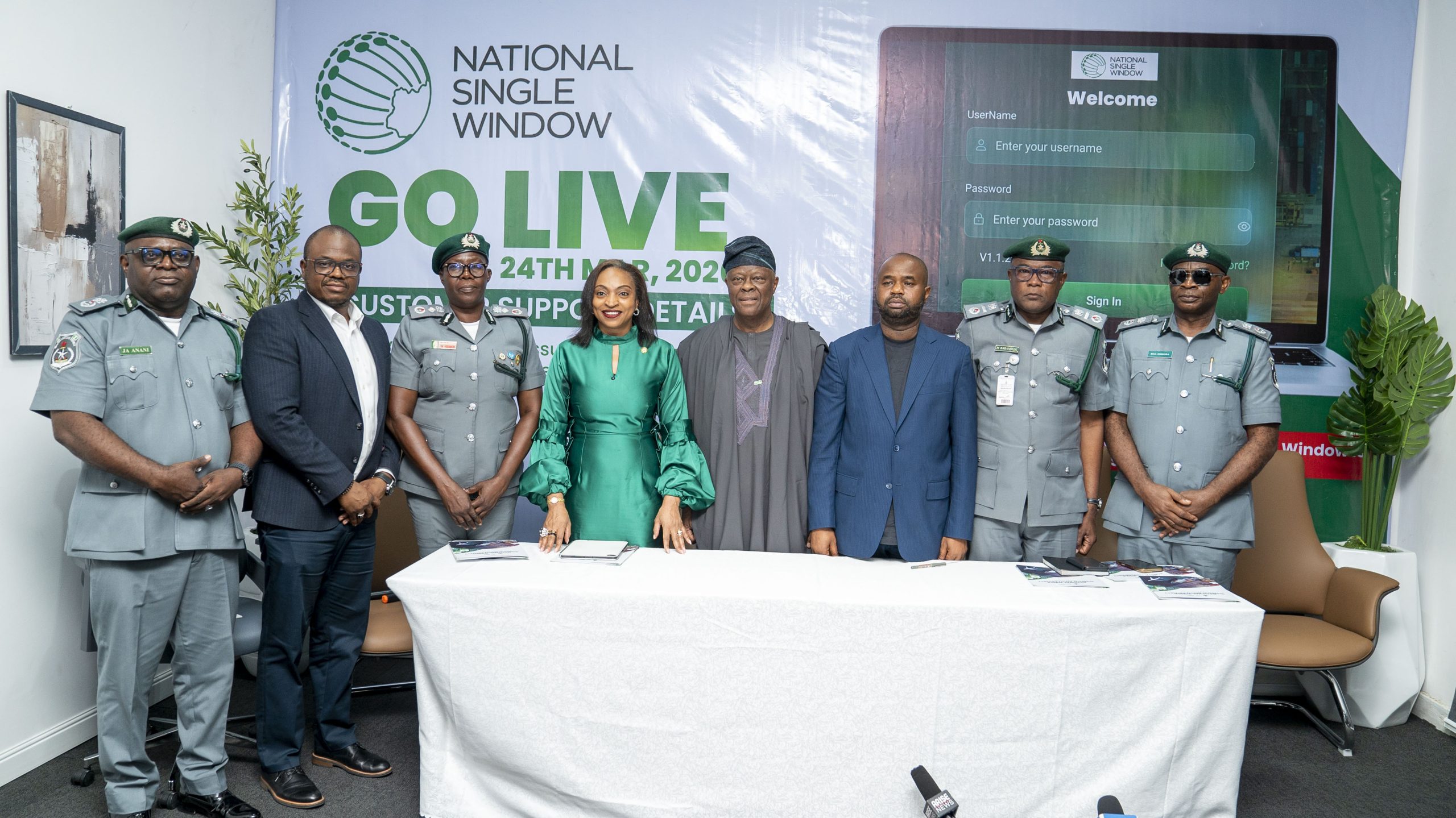
As Nigeria prepares to switch on its long-awaited National Single Window (NSW) platform on Friday, the Federal Government has projected a decisive shift in the country’s trade landscape, promising faster cargo clearance, reduced port costs, and improved competitiveness.
The Minister of Finance and Coordinating Minister of the Economy, Wale Edun, said the digital platform would dismantle longstanding bureaucratic barriers that have hindered trade efficiency and inflated the cost of doing business at Nigerian ports.
Speaking to journalists at the NSW Customer Support Centre in Apapa, Lagos, on Tuesday, Edun described the initiative as “a game changer” designed to unify and streamline import and export processes.
“For decades, businesses have struggled with duplication, delays, and excessive charges arising from multiple agency interfaces,” he said. “The National Single Window eliminates these inefficiencies by creating a one-stop digital platform where documentation is submitted once and processed seamlessly across agencies.”
He added that the reform goes beyond technology, reflecting a stronger commitment to execution. “We have seen attempts in the past, but what distinguishes this effort is the political will, the institutional alignment, and the capacity to deliver results,” Edun noted.
According to him, embedding the NSW within Nigeria’s legal and regulatory architecture ensures its sustainability beyond any administration. “This is not a temporary intervention. It is a structural reform that will endure because it is anchored in law and integrated into existing frameworks,” he said.
Edun acknowledged the possibility of technical downtime but stressed that the system was built with resilience in mind. “No system is perfect, but this platform prioritises continuity and drastically reduces the inefficiencies associated with manual and fragmented processes,” he added.
On the economic impact, the minister said the platform is already funded through budgetary provisions across relevant agencies and is expected to boost government revenue indirectly. “When businesses operate more efficiently, productivity rises, compliance improves, and ultimately, tax revenues grow,” he said.
Also speaking, the Minister of Industry, Trade and Investment, Jumoke Oduwole, addressed concerns about inclusivity, particularly for small and medium enterprises (SMEs).
“SMEs are already leveraging technology to cut costs and save time. The NSW builds on that strength,” she said. “We are providing targeted support through our agencies, including the Nigerian Export Promotion Council, to ensure awareness, onboarding, and capacity building.”
Oduwole added that subnational engagement programmes and support centres would help bridge digital gaps. “We are taking this beyond major cities. Traders and exporters across all states will be supported to ensure no one is left behind,” she said.
She further clarified that the integration of government agencies would not disrupt existing systems. “Each agency retains its operational structure, but they are now connected. Users will submit documents once, and the information will be shared across the ecosystem,” she explained.
Director of the National Single Window, Tola Fakolade, highlighted the operational benefits for businesses.
“This platform does not eliminate agencies; it simplifies interaction with them,” Fakolade said. “Instead of moving from office to office and making multiple payments, businesses now engage through a single interface.”
He noted that the system centralises payments and automatically distributes funds to relevant agencies, reducing human contact and opportunities for unofficial charges. “What this means is faster processing, greater transparency, and a significant reduction in transaction costs,” he said.
Fakolade added that nationwide awareness campaigns are ongoing to ensure widespread adoption. “We are reaching traders across the country, including those in underserved areas, to ensure they can fully benefit from the system,” he said.
With the launch imminent, stakeholders say the NSW could mark a turning point in Nigeria’s trade facilitation efforts—if effectively implemented.