
Apapa Customs intercepts ₦43.59bn cannabis, codeine, expired drugs, drones
Importers of dangerous goods now hide them in legitimate consignments — CG
Maureen Aguta
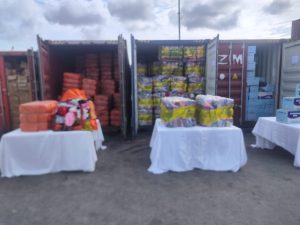
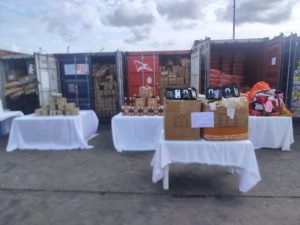
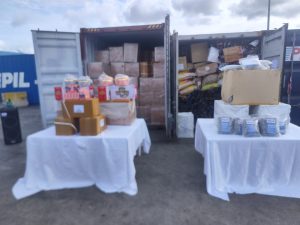
The Nigeria Customs Service (NCS), Apapa Area Command, has intercepted prohibited and security-sensitive goods with a total Duty Paid Value (DPV) of ₦43.59 billion, including more than 7.6 tonnes of cannabis, 169,998 bottles of codeine syrup, 108 drones and containers of expired drugs and disposable nappies.
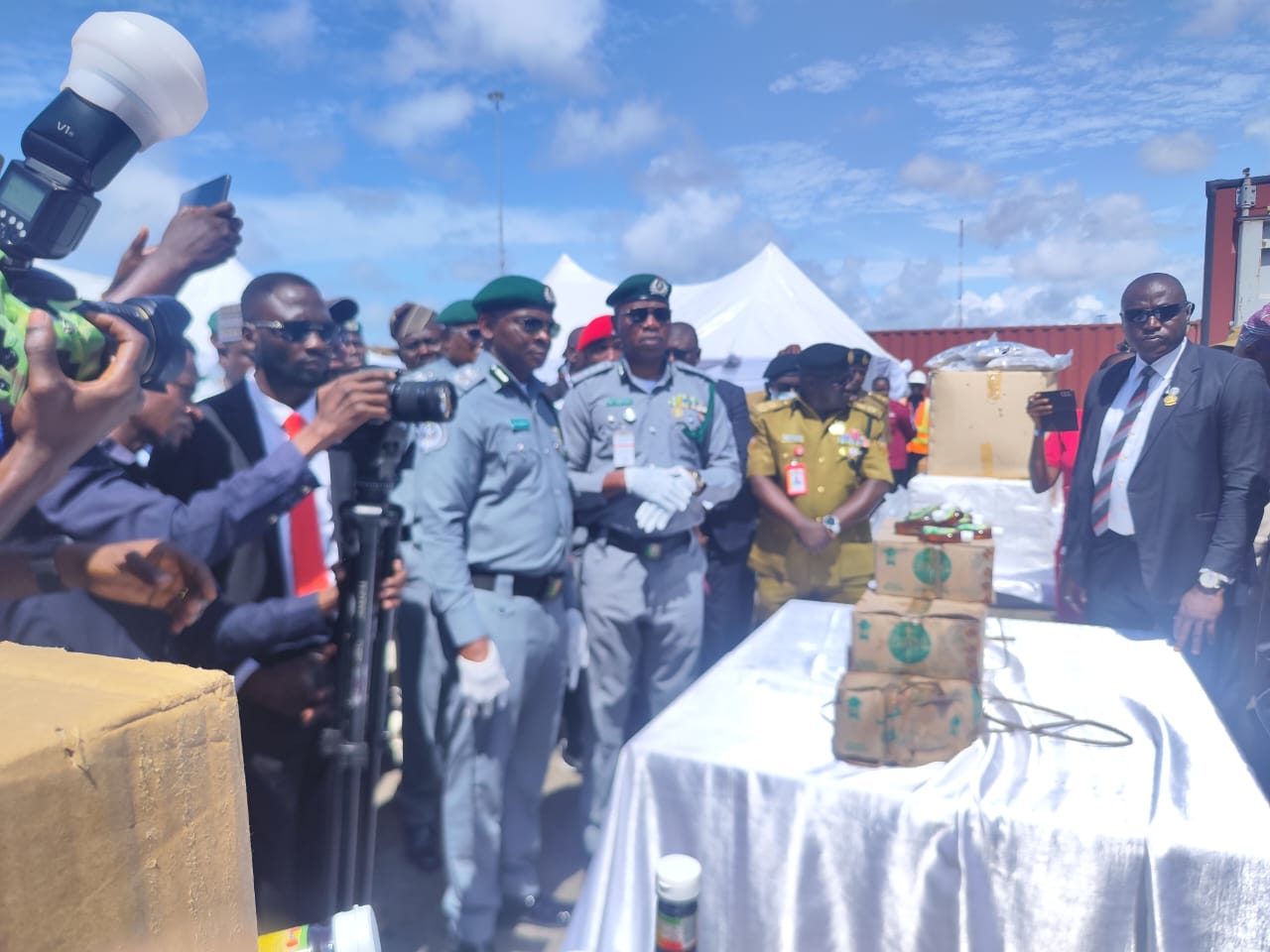
The Comptroller-General of Customs, Bashir Adewale Adeniyi, disclosed this on Thursday while briefing journalists on the seizures, saying criminal syndicates were increasingly concealing dangerous goods inside legitimate consignments to evade detection.
Adeniyi clarified that the ₦43.59 billion represents the combined Duty Paid Value of the seized consignments, covering the applicable customs duties and taxes used to assess the cargoes, rather than the street or commercial value of the prohibited items.
He said the development had made intelligence-led cargo profiling and targeted examination critical to stopping narcotics, controlled pharmaceuticals, security-sensitive equipment and unsafe products from reaching the Nigerian market.
“Narcotics are packed among vehicle spare parts and used vehicles. Controlled drugs travel beneath household goods. Restricted equipment is declared as ordinary electronics,” he said.
According to him, the Service had strengthened cargo profiling and risk assessment across its commands, supported by the B’Odogwu platform, while an INTERPOL Data Centre established at its Abuja headquarters had expanded access to international security databases.
He said Customs had also deepened collaboration with the National Drug Law Enforcement Agency (NDLEA), NAFDAC, the Office of the National Security Adviser (NSA) and international security partners.
Giving details of the seizures, Adeniyi said three containers contained 15,245 parcels of cannabis sativa weighing 7,624kg, or more than 7.6 tonnes.
One 40-foot container held 4,777 parcels weighing 2,388.5kg, concealed alongside automobile spare parts, coffee mix, oats and three vehicles.
Another contained 8,287 parcels weighing 4,145kg, while a third held 2,181 parcels weighing 1,090.5kg, alongside foreign rice, automobile spare parts, lithium batteries and other goods.
Also intercepted was a 40-foot container containing 1,700 cartons of codeine syrup, totalling 169,998 bottles, concealed beneath household items.
Adeniyi said the cannabis seizures resulted from intelligence-led operations carried out with the NDLEA and international security partners, followed by documentary scrutiny, cargo profiling and targeted examination
Drones, expired products
Customs officers also intercepted 108 high-definition dual-camera drones.
Adeniyi said while drones had legitimate applications, they could become security threats when acquired by criminal elements for surveillance, reconnaissance or delivery purposes.
He disclosed that the seized drones would be handed over to the Office of the National Security Adviser for further investigation.
The Service also intercepted five containers loaded with expired tomato ketchup, antiseptic liquid, vaginal tablets and disposable nappies.
The CG said the expired products posed serious risks to consumers, particularly children and women.
He disclosed that the seized drugs and pharmaceutical products would be handed over to the NDLEA and NAFDAC for further investigation and appropriate action.
The operation further yielded 1,282 bales of used clothing from three containers.
Adeniyi assured legitimate importers that the enforcement operation would not obstruct lawful trade, saying Customs would continue to facilitate the movement of compliant cargo.
He urged importers uncertain about the classification, valuation or origin of their goods to use the Service’s Advance Ruling mechanism before shipment, while encouraging compliant operators to join the Authorised Economic Operator programme.
“Compliance is not an obstacle to business; it is an advantage over competitors who lack it,” he said.
Adeniyi warned that no port, border station or logistics channel would be allowed to become a safe haven for prohibited goods, false declaration, concealment or undervaluation.