

Adalikwu unveils blueprint to turn Niger-Delta into Africa’s blue economy hub
Maureen Aguta
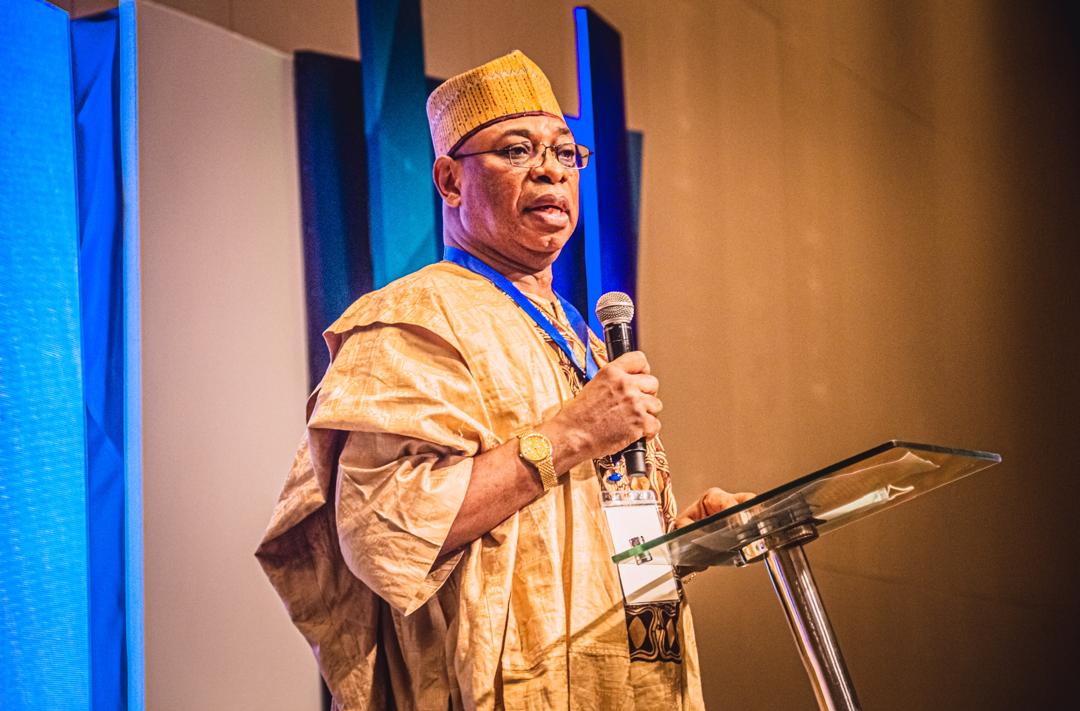
The Niger Delta can emerge as one of Africa’s leading maritime, industrial, logistics and blue-economy growth corridors if the region moves from resource extraction to value creation, the Secretary-General of the Maritime Organisation of West and Central Africa (MOWCA), Dr Paul Adalikwu, has said.
Adalikwu stated this on Wednesday while addressing the inaugural Niger Delta Economic and Investment Summit (NDEIS) at the Obi Wali International Conference Centre, Port Harcourt.
The three-day summit, organised by the Niger Delta Chambers of Commerce, Industry, Trade, Mines and Agriculture (NDCCITMA) in partnership with the Niger Delta Development Commission (NDDC), is themed, “Driving Investment, Innovation and Industrial Growth in the Niger Delta.”
According to Adalikwu, the region’s hydrocarbons, waterways, wetlands, coastline, ports, fisheries, entrepreneurial communities and youthful population represent enormous economic assets, but resource abundance alone cannot guarantee prosperity.
He said the priority should be to transform the region’s resources into productive assets, industries, jobs, trade and investment returns.
“We must move from extraction to value addition; from isolated projects to integrated economic systems; and from dialogue to bankable deals,” he said.
Adalikwu said the Niger Delta should no longer depend primarily on crude oil exports, but develop the capacity to export refined petroleum products, petrochemicals, gas-based products, processed agricultural commodities, manufactured goods, maritime services and knowledge.
He described the region as “fundamentally a maritime region,” stressing that its development strategy must put the maritime economy at the centre.
He identified shipping, ports, inland waterways, shipbuilding and repair, marine engineering, fisheries, aquaculture, offshore services, logistics, maritime tourism and marine technology as key areas capable of generating jobs and investment.
The MOWCA chief said efficient ports could stimulate demand for trucking, warehousing, banking, insurance, ICT, manufacturing, construction and hospitality, while functional inland waterways could reduce logistics costs and reconnect isolated communities.
He also urged stakeholders to exploit the Niger Delta’s strategic location on the Gulf of Guinea to position the region as a gateway to West and Central Africa.
MOWCA, which comprises 25 member states, including 20 coastal and five landlocked countries, he said, wants the Niger Delta positioned as a gateway to the wider regional maritime economy rather than simply as an oil-producing area.
Linking the proposal to the African Continental Free Trade Area (AfCFTA), Adalikwu said trade agreements alone could not move cargo.
“Infrastructure, logistics, shipping and efficient borders do,” he said, warning that weak intra-African maritime connectivity and inadequate coastal shipping would continue to limit the benefits of regional trade.
He proposed a Niger Delta Investment and Blue Economy Compact involving governments, NDDC, development finance institutions, private investors, communities and technical partners.
The compact, he said, should focus on 10 areas, including an integrated maritime and logistics corridor, gas industrialisation, agro-industrial clusters, inland waterways, ship repair and offshore services, coastal resilience and a youth maritime and technology programme.
Adalikwu also called for stronger pathways from education to skills, finance and jobs, particularly in marine engineering, naval architecture, port operations, logistics, hydrography and maritime technology.
“Africa cannot build a competitive maritime economy by importing most of its technical expertise,” he said.
He said MOWCA was ready to support maritime connectivity, safety and security, ports, shipping, inland waterways, human-capacity development and blue-economy investment.
“Security must create the conditions for commerce; commerce must create prosperity; and prosperity must reinforce stability,” he added.