

Tourism: Coker, stakeholders demand AI regulations, digital overhaul
By Onyeka Ezike
Former Director-General of the Nigeria Tourism Development Authority (NTDA), Folarin Coker, and other tourism stakeholders have called for stronger regulations and strategic deployment of Artificial Intelligence (AI) to transform Nigeria’s tourism and travel industry.
The stakeholders said Nigeria must move beyond mere digitisation and focus on genuine digital transformation that would make travel seamless, improve tourism businesses and enhance the experience of visitors and travellers.
Their call followed the recent technical network glitch involving the Nigeria Centre for Disease Control (NCDC) and the Nigeria International Travel Portal (NITP), which disrupted travel operations and reportedly left thousands of inbound and outbound passengers stranded at airports around the world.
The incident, which reportedly prevented passengers from boarding flights to Nigeria, has renewed concerns over the country’s dependence on digital systems and the need for stronger technological infrastructure, effective regulation and better integration of AI into the travel ecosystem.
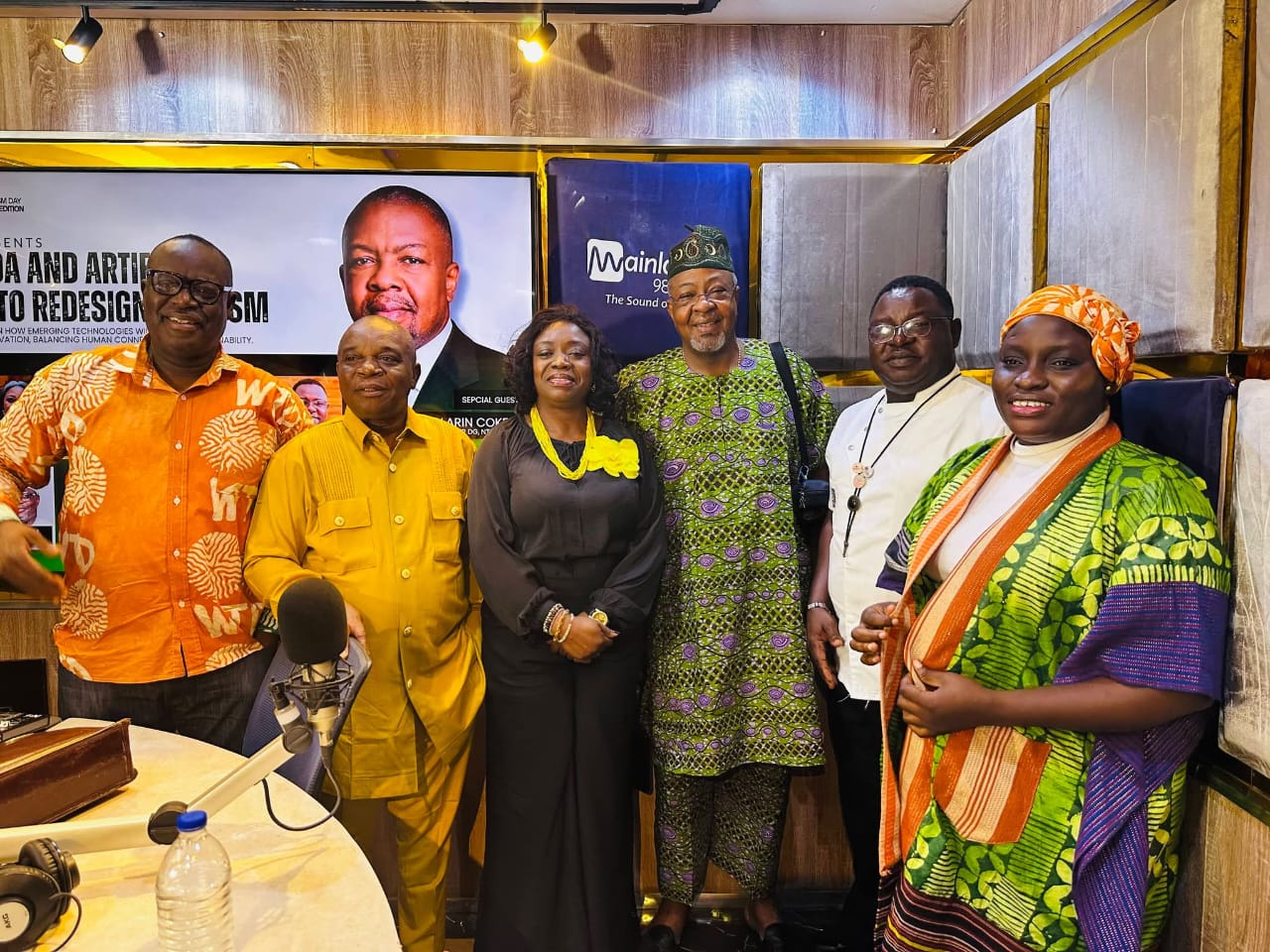
Speaking on Villa Square, a special segment of Cre8tive 9Ja, a weekly tourism and culture magazine programme hosted by veteran tourism journalist Frank Meke and Bunmi Bade-Adeniji on Mainland 98.3 FM, Lagos, Coker warned against equating the deployment of technology with genuine reform.
“We should not confuse digitisation with transformation. Putting a broken process online is not reform,” he said.
According to him, Nigeria’s objective should be to make travel easier, improve the productivity of tourism businesses and ensure better management of destinations.
Coker said the existing system needed to be fundamentally restructured before AI could be effectively deployed to improve passenger experience.
He identified several areas where AI could enhance tourism and travel, including embassy and visa processes, flight bookings, pricing, arrival experiences, transportation and cultural engagement.
“Artificial Intelligence and technology are being mistaken for true development. It is not about another app or website, but about fixing the things that need to be fixed and setting the standards,” he said.
Also speaking, Managing Director of Global Links Service, Pastor Chinyere Umeasiegbu, blamed airline operators for some flight disruptions, urging them to address the recurring problem of cancellations through sustainable reforms rather than relying solely on AI.
She also called for improved communication between airlines and passengers, advising travellers to take screenshots of messages relating to flight delays and submit them to relevant authorities where necessary.
Coker further urged the government to tackle fundamental infrastructure challenges, particularly roads and security, while establishing standards for globally competitive hotel services.
He cautioned against treating AI as a substitute for broader development, stressing that technology should complement, rather than replace, the infrastructure required to support a thriving tourism industry.
“A digitally driven tourism agenda is what most people are using. However, we have a gifted cultural expression that can help amplify our tourism agenda, from music, fashion and food to medical tourism,” he said.
He said government must make Nigeria’s tourism experience more accessible by providing the necessary infrastructure and ensuring that tourism products and destinations can be easily booked without technological disruptions.
Meanwhile, the Director-General of the National Council for Arts and Culture (NCAC), Obi Asika, disclosed that the council had established a Council for Creative Technology and would soon publish a digital roadmap outlining how AI could be incorporated into the arts and culture sector.
Asika stressed the importance of ensuring that Nigerian and African cultural content is properly represented in AI systems.
“We need to enrich Artificial Intelligence with the elements of our culture, our history and our content. We need to do this and put the necessary systems in place because, if we don’t, Artificial Intelligence might not be able to see us,” he said.
He said the concern was partly connected to the data and content used to train AI systems, noting that African and Black tourism and cultural knowledge required greater representation.
On the role of AI in food tourism and the global promotion of Nigerian cuisine, Chef Shine said the technology could be deployed to properly document and promote the country’s culinary heritage.
“It is important for us to use AI to document our food properly. AI will not take over our food, nor will AI cook the food,” he said.
“This is the best time to discuss the digital agenda and Artificial Intelligence. We need to use AI to document our food and monetise our cuisine,” he added.
Similarly, travel and tourism journalist, Okorie Uhuru, said AI was already changing the way destinations and tourism products were marketed globally.
“The old order of doing things, like packaging a destination tour and marketing tourism, has faded because of Artificial Intelligence. AI has helped us market our tourism to a global audience,” he said.
Uhuru urged tourism stakeholders and individuals to adapt to the technology to remain competitive.
“As individuals, you have to make an effort to align with AI to sell your tourism product; otherwise, you will be left behind,” he said.
Professor Wasui Babalola, however, called on the government to formulate policies capable of translating technological advancement into tangible economic value.
He stressed that digital transformation in the tourism sector must retain a human element to deliver meaningful development.
“The knowledge of the digital process should be given with a human element, and that is when our tourism would improve,” Babalola said.
This version keeps the original substance and quotations intact while giving it a stronger news lead, tighter transitions and a more prominent tourism-business angle.