

MARCON, IMION move to unlock Nigeria’s untapped maritime wealth
By Maureen Aguta
The Maritime Correspondents’ Organisation of Nigeria (MARCON) and the International Maritime Institute of Nigeria (IMION) have moved to deepen collaboration on maritime knowledge, research, training and stakeholder engagement as part of efforts to unlock the vast economic potential of Nigeria’s blue economy.
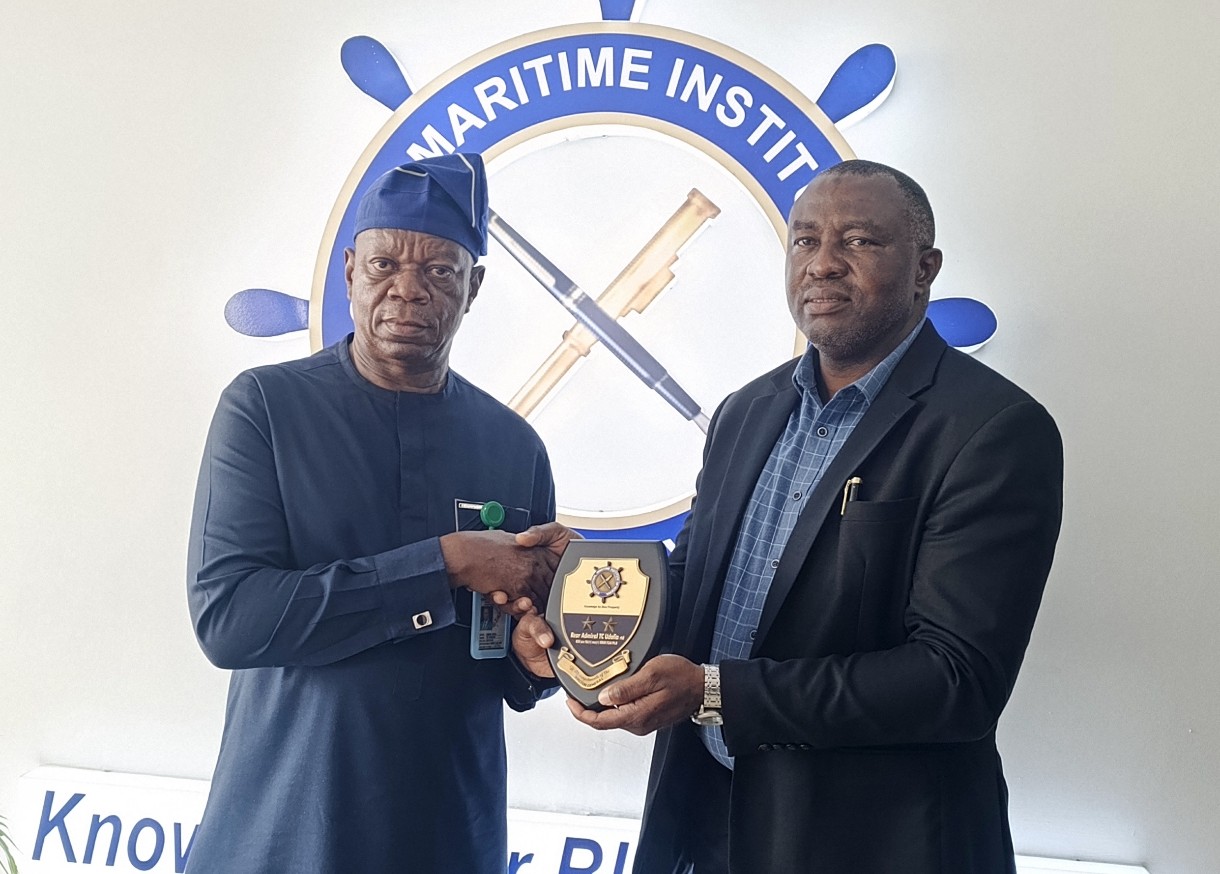
The commitment emerged on Wednesday when the executive members of MARCON paid a courtesy visit to IMION, where both organisations discussed ways of strengthening interaction between the Institute and key players across the maritime sector.
Director-General of IMION, Rear Admiral Thaddeus Udofia (Rtd), described the Institute as a strategic think tank, training and research institution established to contribute to the development of Nigeria’s blue economy.
Udofia welcomed the initiative by MARCON, stressing that closer collaboration would enhance the dissemination of maritime knowledge and create greater opportunities for stakeholders to engage on emerging issues confronting the industry.
He said IMION valued the role of maritime journalists in shaping public understanding of developments in the sector, adding that the Institute was prepared to work with MARCON in promoting its programmes and connecting them with relevant industry stakeholders.
“We value the contribution of MARCON to the maritime sector and we are willing to work more closely with the organisation to promote maritime knowledge and engage stakeholders on issues that affect the industry,” he said.
In his remarks, MARCON President, Ismail Aniemu, said the visit was designed to establish a stronger relationship with IMION and explore areas of mutual cooperation.
Aniemu described IMION as an emerging centre of excellence in maritime training and human-capacity development, commending the Institute for the progress it has recorded within its first two years.
He noted that the growing network of IMION alumni, spanning both the public and private sectors of the maritime industry, was evidence of the Institute’s increasing relevance to the sector.
“I want to commend you for the growth the institute has recorded within the two years of your existence. You are embossing your signature in the sand of time.
“You are indeed gifted and blessed with a very hardworking team. MARCON identifies this and it would not be out of place for us to mention it. Well done to you and the team,” Aniemu said.
The MARCON president also underscored the importance of IMION’s strategic and problem-solving courses to the maritime ecosystem, saying the knowledge acquired through such programmes could strengthen decision-making and improve policy implementation across the industry.
Sustainable fishing conference
A major outcome of the engagement was IMION’s acceptance of MARCON’s invitation to participate in the organisation’s forthcoming conference on sustainable fishing in Nigeria.
The conference, scheduled for September 30 in Apapa, Lagos, will focus on pathways to growth, food security and sustainable coastal livelihoods.
It will also examine critical challenges facing Nigeria’s fisheries and maritime sectors, including illegal, unreported and unregulated (IUU) fishing, Nigeria’s position in the global fishing value chain and the relationship between sustainable fisheries and maritime security.
Aniemu said sustainable fishing was a critical component of the blue economy and that Nigeria could no longer afford to underutilise the economic opportunities provided by its extensive marine and inland water resources.
According to him, developing the fishing value chain would not only boost food production but also create jobs, strengthen coastal communities and generate additional economic opportunities.
Udofia confirmed IMION’s participation in the conference, saying the Institute was ready to bring its expertise and institutional perspective to discussions on sustainable fisheries and the wider blue economy.
The collaboration between MARCON and IMION is expected to expand beyond the conference, with both organisations looking at opportunities for sustained engagement in maritime training, research, knowledge sharing, stakeholder interaction and industry development.
The partnership comes at a time when Nigeria is seeking to move beyond its traditional dependence on oil by harnessing opportunities in maritime transport, fisheries, shipbuilding, marine tourism, offshore services and other components of the blue economy.
For both organisations, stronger cooperation is expected to provide an avenue for bridging the gap between maritime knowledge, policy discussions and industry practice while contributing to the development of a more competitive and sustainable maritime sector.