

CGC Adeniyi charges Customs Image Makers on strategic communication to strengthen institutional trust
Maureen Aguta
The Comptroller-General of Customs (CGC), Adewale Adeniyi, has charged Public Relations Officers of the Nigeria Customs Service (NCS) to embrace strategic, intelligence-driven communication as a critical tool for driving reforms, strengthening institutional credibility and sustaining public trust.
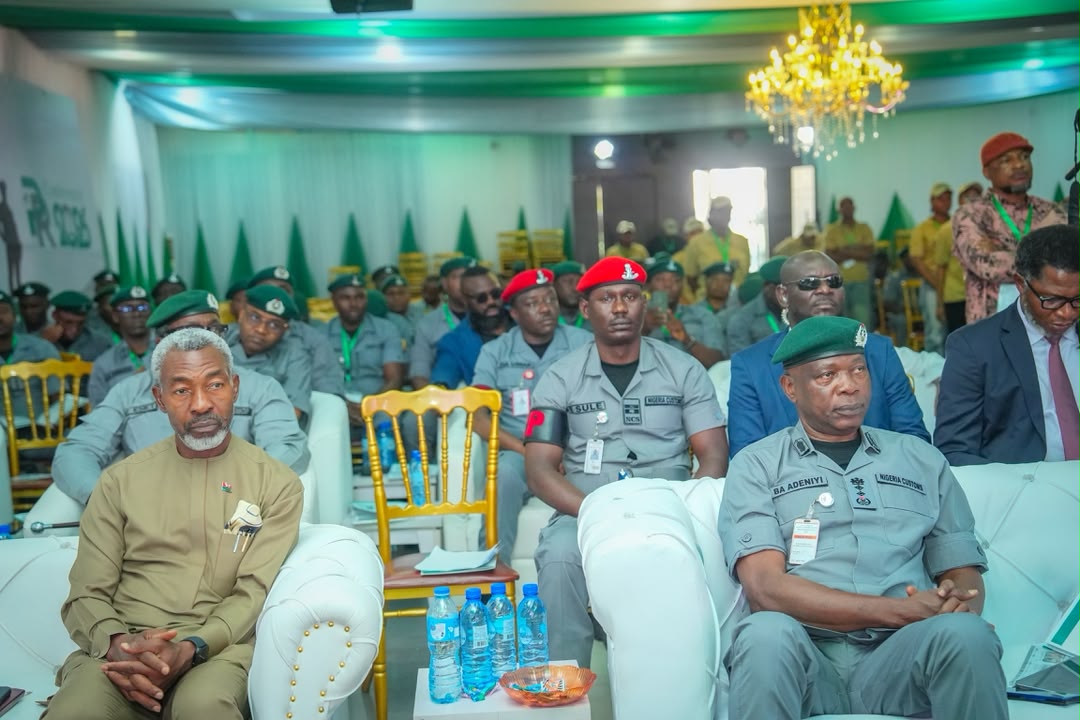
Adeniyi gave the charge at the closing ceremony of the 2026 Nigeria Customs Service Public Relations Conference held in Port Harcourt, Rivers State, stressing that effective communication has become indispensable to the success of institutional reforms in an era defined by digital disruption and real-time information flow.
The four-day conference, themed, “Realigning Corporate Communication as a Strategic Driver of Institutional Effectiveness and Public Trust,” brought together Customs communication professionals to deliberate on repositioning corporate communication as a strategic management function within the Service.
Describing the conference as a platform for reflection, learning and institutional renewal at a defining moment in the Service’s transformation journey, Adeniyi said communication had evolved globally from a support service to a strategic management function.
“Reforms cannot succeed unless they are understood, accepted and trusted by the people they are designed to serve,” he said.
He noted that the rapid rise of digital media, artificial intelligence and real-time information ecosystems demands that Customs Public Relations Officers become more proactive, research-driven and intelligence-led in communicating government policies and the Service’s operations.
“Every seizure, every reform, every trade facilitation initiative and every act of service must be communicated professionally and purposefully,” the Customs boss stated.
Earlier, the Acting Zonal Coordinator of Zone ‘C’, Comptroller Pascal Chibuoke, described corporate communication as a strategic asset that shapes public perception, strengthens stakeholder confidence and reinforces institutional legitimacy.
He said, “Corporate communication is no longer a support function. It is a strategic asset that shapes public perception, strengthens stakeholder confidence, promotes transparency and reinforces institutional legitimacy.”
Also speaking, the National Public Relations Officer of the Service, Deputy Comptroller Abdullahi Maiwada, described this year’s conference as another milestone in the evolution of Customs corporate communication, noting that it builds on the successes recorded in Lagos, Gwagwalada and Kano in previous editions.
He emphasised that institutional reforms cannot thrive without an effective communication framework, adding that the conference was designed not only to exchange ideas but also to develop practical solutions, strengthen professional networks and reposition Public Relations as a strategic corporate communication function within the Nigeria Customs Service.
In her closing remarks, the Customs Area Controller of Port Harcourt Area I Command, Comptroller Salamatu Atuluku, commended the Comptroller-General for sustaining investments in professional development and institutional capacity building. She urged participants to deploy the knowledge gained at the conference towards improving service delivery across their various commands.
In separate goodwill messages, the President of the Nigeria Institute of Public Relations (NIPR), Ike Neliaku, and the President of the Nigeria Union of Journalists (NUJ), Alhassan Yahaya, lauded Adeniyi’s leadership in institutionalising strategic communication within the Service and challenged Public Relations Officers to uphold the highest standards of professionalism.
The conference featured technical sessions on Customs modernisation, crisis communication, media intelligence, digital innovation, stakeholder engagement and emerging communication technologies, underscoring the Service’s commitment to strengthening its communication architecture in line with global best practices.